Monday, December 2, 2013

Jesse Tree: the Story of How God Created Everything

"In the beginning God created the heavens and the earth." The book of Genesis tells how God created everything: light and darkness, water and dry land, plants and animals, and human beings, male and female, in God's own image. And when God saw all of creation, "behold, it was very good." This story reminds us that the whole universe is God's creation, and that our life is a loving gift from God, and that all of it is very, very good.

Genesis 1:1-2:3


Potential ornament to make for the Jesse Tree: the Earth

Sunday, December 1, 2013

Advent 1: "planting" your Jesse Tree

Here is a brief retelling of the story from Scripture which gives the Jesse Tree its name. (If any of you have read Star of Wonder, you’ll note that the young shepherd is named Jesse, just like the keeper of sheep from ancient times.) This is what you will read when you first plant your Jesse Tree and light the candle:

This is a story of Jesus' family tree. Long ago, the prophet Isaiah told the ancient Hebrew people that a new branch would grow from an old tree stump. Isaiah said that this new branch, this new life, would come from the family of Jesse, a farmer and keeper of sheep who lived near Bethlehem. David, Israel's most famous king, was Jesse's youngest son, and Jesus was born hundreds of years later into David's family of descendants. The prophet Isaiah wrote:

          A shoot will spring from the stump of Jesse, and a branch shall grow out of his roots. And the Spirit of the Lord shall rest upon him.

All the "ornaments" that we make to hang on our Jesse Trees come from different stories in the Bible that happened before Jesus was born and so they are part of what make up his family tree.

Sunday, November 24, 2013

Final preparation for the Jesse Tree

Next Sunday, on December 1, Advent begins:  a good time to "plant" your Jesse Tree

Throughout Advent, evening by evening, after you light the candle(s) near your Jesse Tree, consider doing the following:

     Either recite this brief prayer:
o  Parent: You, O Lord, are my lamp.
o  Children: My God, you make my darkness bright.

or try singing a verse or two from an Advent hymn (you can find very different online versions of any of the following: "Come O Come Emmanuel";  "Come, Thou Long-expected Jesus"; "On Jordan's Bank the Baptist's Cry" -- experiment till you find one you like)

·     Read the day’s brief Scripture story aloud to your children. As they get older, you may want to switch to reading the original stories from the Bible.

·     Ask one of the children to hang the appropriate "ornament" that you've created earlier in the day to go with the reading.  If you have several children, you can alternate who lights candles, who hangs the ornament, who does the closing blessing, who puts out the candle.  Try to include everyone each evening.

·     After hanging the day’s symbolic ornament, say the following brief blessing:

o  Parent: In this Advent season, Lord, help us to hear and heed these stories as we prepare for the Holy Birth on Christmas.
o  Child: God bless us all. Amen.

·     Put out the candles, unless you want to leave them burning until bedtime and ask one of the children extinguish them then.

Note: Don’t feel you have to do every reading, or that you have to follow this particular set of rituals. Find your own comfort level, using this simply as a resource to develop your own family activities.


Monday, November 18, 2013

Getting ready for Advent, before getting ready for Christmas

It's almost Advent, so time to start thinking about how to "keep the faith" in the midst of commercial chaos.

(Those of you who followed this blog last year will recognize much of what's coming over the next month.)

When my kids were little, maintaining a Jesse Tree during Advent helped counter the cultural pressure to see Christmas as nothing but "What do I get? What will be under the tree for me?" 

By making "ornaments" to symbolize stories from Scripture and then hanging them on a small branch we cut ahead of time, we found the Jesse Tree to be a family ritual which gave the gift of Scripture to our children and allowed the old stories to etch themselves into their memories. It's a fine companion to the traditional Advent Calendar, an additional buffer to the commercial kidnapping of Christmas.

Incorporating the Jesse Tree into Advent simply involves retelling a story from Scripture each day during Advent, and then making some sort of symbol to represent that story (an "ornament") to hang on the branch. Our "ornaments" were pretty basic -- we were not an artistic bunch. Some families create much more elaborate (or at least attractive) Jesse Tree ornaments. Note the photo of our Jesse Tree -- and be convinced that even the artistically challenged can do this, or be inspired to do better.

Madeleine L'Engle used to talk about the ancient magic of telling stories around tribal fires at night. Even within our contemporary homes, we can recreate this sense of awe and wonder.  The Jesse Tree ritual of lighting a candle and telling a story unites those participating.  The more ritual and story we can incorporate into family life, the deeper the sense of community we share with one another, and by enlivening our children's imaginations with these ancient stories we can help them see themselves as part of God's ongoing creation, as part of salvation history.


If this is the first year you create a Jesse Tree, you’ll need to make the symbolic ornaments to hang on the “tree”, either day by day or in a marathon crafts session.  I’ll offer potential symbols for each story, but you might want to come up with your own; many families use a rainbow for Noah's story, for example, but one of my sons loves animals so we had giraffes.  To make the symbols, we used colored construction paper and felt tipped pens, or cut out and glued felt, or we used found materials.  For Isaac's sticks, for example, we bundled a small bunch of twigs together, and for Rahab's cord, we used a piece of red ribbon.  You can’t get it wrong.

Go for a walk with your children to look for a branch from a bush or tree that you can "plant" in a flower pot filled with sand or place in a sturdy vase. On the first night of Advent, or on whatever night you begin, instead of hanging a symbol on the Jesse Tree you will "plant" it. 

Then each night, light a candle or two near where you put the Jesse Tree and tell one of the stories.  (If you are comfortable doing so, have one of the children light the candle, but keep it far enough away from the tree to avoid a fire.)


By looking at our cat Zeke trying to steal ornaments, you can get a sense of the size of the branch we use for our Jesse Tree, and some of our rather primitive symbols.  Years ago when our children were young, one of their friends looked at the dead branch with its paper ornaments and asked in horror, "Is that your Christmas tree?" Micah explained that no, this was a Jesse Tree, not a Christmas tree, and proceeded to share some of the stories that went with the symbols. Later, when he was in an 8th grade Humanities class, he aced work on Judeo-Christian Scriptures because he already knew all the stories. 


Next week,  I'll have a little more about the Jesse Tree, and on December 1st and every day after, all the way through to Christmas Eve, I'll post a brief retelling of a story from Scripture along with a suggested ornament to make.

Monday, November 11, 2013

Reptilian brains and boredom

Reptiles don't dream.

Boredom can foster creativity and spirituality.

Now bear with me while I try to connect those two seemingly disparate statements.

Reptiles don't dream because they live in a constant state of simple visual awareness that is like our REM  dreaming sleep.

Only recently did I learn that all mammals (including humans) still have a reptilian brain, which begins at the top of the spinal column and reaches into the midbrain region. Our residual reptilian brain is where our own dreams originate, and it is activated by such visual stimulants as television, movies, and video games.

This primitive part of our brain is the source of aggression, territoriality, greed, hostility, ritual -- all sorts of instinctive survival behaviors -- and it is also the place where human beings "stuff" things that disturb or distress us when we fail to process them. (This makes me think about how badly I sleep if I go to bed without processing a particularly difficult day. No wonder: I'm inviting the alligators to come out and play…..)

All this raises a couple of red flags for those of us who tend children.

First, this is another way of telling us that allowing kids to watch too much television (or movies or video games) means that we are failing to help them develop the evolutionarily more complex neocortex, but instead are providing stimulation of the primitive, aggressive reptilian part of the brain. It's not just a matter of watching violent content, but of passively watching anything for too long a time.

Next, awareness of our reptilian brain alerts us to the importance of listening to the stories our children tell, day by day, keeping us alert to those things that frighten or hurt them. Failure to confront trauma and difficulties as they arise can end up feeding those negative feelings to the reptilian brain, which in turn can lead to nightmares,  anxiety, and depression.

So where on earth does boredom factor into all this talk of aggression, repression, and reptiles?

"Boredom," I was raised to believe, was a bad word for a bad reality. My own mother was determined that her children would never be bored, and so she taught us to read early, enrolled us in ballet classes, insisted we take piano lessons, initiated play groups, and later encouraged us to have friends over often. Her encouragement of active engagement seems small potatoes compared to the crowded schedules so many kids currently maintain.

Constant busyness, however, even if it doesn't involve television or video games, can prevent the necessary processing of daily experience. If there's always "the next thing" to do, there's no time to think about what's already happened, good or bad, and there's no reason for children to be in charge of their own reality.

When we allow our kids to experience enough down time to become bored, we give them the chance to come up with ways of entertaining themselves. I used to hate hearing, "Mama, I'm bored." It felt like an accusation, a statement that I had failed as a mother. In retrospect, I realize that I was trying too hard to give them -- give them  -- whatever they needed rather than letting them find their own way.

Providing times of "nothing in particular to do," by the way, can also begin to foster spirituality in children. If we fill our children (or ourselves) with too much busyness, there's no room or time for God. Remember the promise of Scripture: God will lead us to green pastures and still waters, where we may lie down to rest and be restored (maybe even a little bored?).


Sunday, October 27, 2013

Moving and mayhem and bread: this is not a gluten-free post


Bread and Blessings, redux

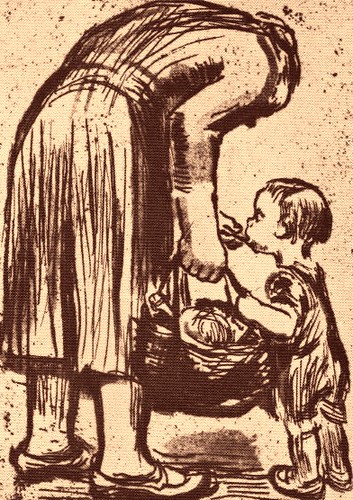
This print from German artist Kathe Kollwitz hangs in our living room. The mother's posture has always reminded me of a priest bending down to offer the consecrated bread: "Take, eat....the bread of heaven...." Bread, it seems to me, must be the food of angels.

Today my workshop at the prison was canceled because the women were quarantined, so I sat in the living room across from this print and read Gilead, by Marilynne Robinson. There's a passage where the narrator recounts a childhood memory of watching the grown-ups deal with a burned-down church, salvaging what they could, burying destroyed Bibles and hymnals. At one point, his father "brought me some biscuit that had soot on it from his hands.... I remember my father down on his heels in the rain, feeding me biscuit from his scorched hand, with that old blackened wreck of a church behind him.... I remember it as communion, and I believe that's what it was."  The passage made me weep, remembering times of sharing bread and blessings with my young children years ago, and all the years of loss and gift and blessing since then. The accumulated years of bending down to feed a child began to prepare me for offering the Eucharist. Sometimes it's hard to know which is more sacred.

This Sunday's gospel tells my favorite story in all of Scripture: Jesus' post-resurrection invitation to breakfast on the beach, where he is cooking fish and bread over a charcoal fire for his confused and uncertain disciples. On the hillside for 5000 people, at his Last Supper in the upper room at Passover, on the road to Emmaus, on the beach -- in all these places, before and after his death and resurrection, our Lord took bread, blessed it and shared it.

In our call to follow in his Way, it seems to me that baking bread with our children, filling the home with its aroma, then sharing it with them offers wordless blessing. There are a lot of really lovely bread recipes out there, but even buying frozen bread dough and starting with that will work its holy magic.

So sometime during this Easter season, bake bread with your children, knowing that it carries within it deep and inexplicable blessings for the home, for the children, and for you. -- And, in case you worry, the blessings far outweigh the carbs.

And, I can now report, baking bread also blesses a new home (especially when eaten with butter....)

Saturday, October 12, 2013

Golden October and Goblin Trees

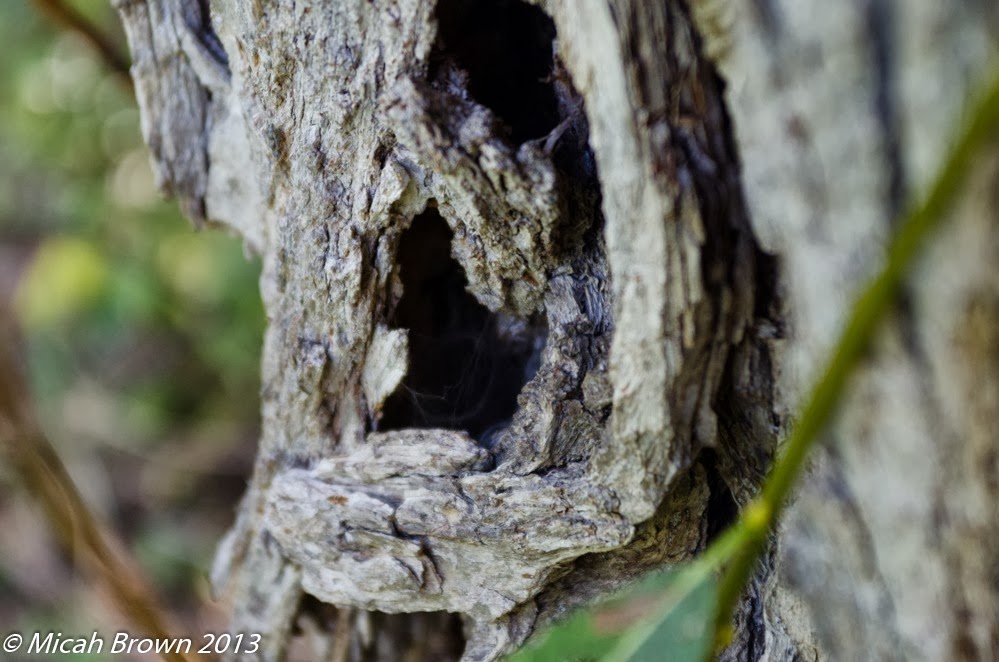
No stories this week, but plenty of knobby goblin trees. (Thank you!) Seems a perfect time of year to take the children out for a walk to look for beauty and blessings and quirky trees and places that goblins and elves and fairies might live. It makes a compelling reason to get outside and look around. These trees come from Maine, Arizona, Virginia, and New Mexico.  Have fun finding goblin trees in your own neighborhoods!

(And if you wonder what all this is about, check here.)


Monday, October 7, 2013

An outside autumn activity: for the birds!

Lots of churches celebrated St. Francis' Day this past weekend with the blessings of animals; at St. Paul's in Brunswick, Maine we had 10 dogs, a rabbit, a hamster, lots of stuffed animals, and the ashes of a beloved pet.

Behind the altar for the Family Service hung a banner that showed St. Francis surrounded by fluttering, multi-colored birds. The birds reminded me of the little girl's comment last week that "birds are angels," which would mean that the banner showed St. Francis surrounded by angels. A happy thought!

                                                   from Jennie's Hat, by Ezra Jack Keats

St. Francis and angels and birds: what a lively trinity! In celebrating both St. Francis (this week) and St.Michael and All Angels (last week), birds really do figure prominently. For example, on Michaelmas, which occurs just five days before St. Francis Day, farmers used to scatter grain for the wild birds in oder to bring good luck to their farms.

So I thought I would share with you a bird-centered activity that my kids used to enjoy when they were little: making bird feeders and then hanging them near-by.

This is incredibly easy (also somewhat messy). You need:

peanut butter (shortening will work if you have a child with peanut allergies)

pinecones that you collect (its own adventure!) or corn cobs or even popcorn balls

bird seed

yarn or string for hanging

What to do:

Put down newspaper as a work surface.

Have the children spread peanut butter all over the outside of the pinecones.

Pour the bird seed into a pan, and let the children roll the pinecones around in the seeds. Seeds will stick to the peanut butter.

Tie a long piece of yarn or string to each pinecone.

Go for a walk to find the right place to hang your bird feeders.

As you walk, or while you work to make the bird feeders, you could teach at least the first two verses of  "All things bright and beautiful." You can find a simple version with lyrics here, or another with a slightly different melody and gorgeous accompanying pictures. 

It's worth celebrating the bright and beautiful world of autumn, and by making these very simple feeders you teach your children to care for all God's creatures.

And if the little girl is right, you'll be feeding angels!


Monday, September 30, 2013

Exuberant Spirituality

A Reflection:
Br. Eldridge Pendleton of the Society of St. John the Evangelist posted on "Brother Give Us a Word" this past Saturday:

It is important, in matters of spirituality, to listen to children. Do not discount as valueless what they have to say. Take them and their comments on spirituality seriously.... [and] let them guide you back to wonder, to the sense of spiritual awe we have lost.

Because yesterday was the Feast of St. Michael and All Angels, I read Season of Angels, which is based on the Book of Tobit, as our Scripture reading at the Family Service. Afterwards we talked about angels.

One of the children said that angels are messengers of God who used to be good people when they were alive and became angels when they died. Another said that angels are beings who are sent by God to help people. A shy child said, "I think birds are angels." Then came the suggestion that the spirit of an angel can enter a person, who can then become a messenger or guide or protector from God for someone else. It was as though the conversation begun back in the 1830's with the children in Bronson Alcott's group had continued through the centuries.

After our conversation, we thought about what prayers we'd like to offer. We prayed for a dog that had fallen downstairs, for a friend injured in a soccer game, for a sick sister who couldn't come to church. Then a grandmother who is raising her orphaned grandchildren told a story that was prayer: the children were spending their first autumn in New England, so that morning before church she drove them down a long point of land that stretches out into the bay, where they saw brilliant red and gold leaves against the backdrop of ocean. "My eyes can't move fast enough to see all this beauty!" her granddaughter exclaimed.

Br. Eldridge is right: not only was the conversation about angels both spiritual and thoughtful, but this little girl's excited observation "guided us back to wonder, to a sense of spiritual awe," and awakened us old-timers to the exuberant beauty of a New England fall which we might otherwise take for granted. We are surrounded by beauty and blessings, but it may take a child to help us notice.

A Challenge:
It's too easy to forget that, because we are made in the likeness of an exuberantly creative God, we, too, are meant to be makers and creators. We cannot spin the stars in their courses or paint a Vermont mountain the colors of autumn, but -- as I come back to again and again -- we can bake bread and tell stories with our children, build with blocks or dance to a favorite song. Being creative with our children helps them live into the fullness of life to which God calls them.

So here I am going to repeat my challenge of last week: sometime between now and October 9, sit down with your children and create a story, in this case a green goblin story using the following ingredients: a rolling pumpkin, a river, bungee cords, a stop sign, and a giraffe.

If this is unfamiliar, you can look at the previous post for some background. No, it's not about angels or Jesus (though, of course, it could be), but a way to nurture a sense of creative play in your children.

Once you concoct a story, send it!

Write it up and email it to this email address -- don't be confused by its name; the address was originally created for Star of Wonder, the companion book to Season of Angels.

Oh, and as I also suggested last week, be on the lookout for goblin trees. Send photos to go with stories -- or send pictures even if you don't send a story. Hunting for goblin trees is its own creative endeavor.

Have fun, and in the process, be on the lookout for beauty and blessings -- and if you have a hard time finding them, ask a child to help.


Wednesday, September 25, 2013

Your turn


Now that there have been five Goblin-to-Go stories, it's time for you (along with your kids) to create a green goblin story of your own. The ingredients for October are: 

* a rolling pumpkin
* a river
* bungee cords
* a stop sign
* a giraffe


See what you can come up with, and send in your stories by Wednesday, October 9. The email address to send it to is connected to Star of Wonder, a Christmas book my niece and I did, but it really is the right one: starofwonderepiphany@gmail.com

If you happen across a goblin tree on your travels, send a photo of that as well. I look forward to sharing what you send, both in story and picture!


If you wonder what goblins are doing here, check out "Jesus Told Stories" from back in May. You can also read the other Goblin-to-Go stories here:


I'm excited to see the stories you create! Enjoy!


Monday, September 23, 2013

A Festal Meal celebrating angels


Because next Sunday is the Feast of St. Michael and All Angels, you might consider having a special meal  with foods of the season -- although you could actually have this particular meal any time!  

Suggestions for food are back in the August 26 posting.

Music: Teach the children to sing "Michael, Row the Boat Ashore" so they will be able to sing it during the Festal Meal. It's an old slave spiritual from the Georgia Sea Islands, invoking the Archangel Michael's help in the hard task of rowing to the mainland. (At a deeper level, it's also about the Archangel Michael's task of carrying the souls of those who have died to join their loved ones on the other side of the Jordan River.) Here are a couple of versions you can listen to online to help you teach your children this lively song about angelic help:
A traditional version with familiar lyrics.

A lively version that might inspire you to find tambourines or drums or other percussion instruments for the children to shake or drum or clang as they sing.

Preparing the table: Because Michaelmas has also traditionally been a festival honoring early autumn, each child could make a name card for the table by drawing, cutting out, and coloring an autumn leaf and then writing his or her own name on it. As they write their names on the leaves, remind them that each of us has a name that is precious to God. If you want to establish who sits where, collect the leaves and set them out just before the meal; otherwise let the children put them at their places once they have finished making them (you could continue on here and have the children set the table as well). As a centerpiece on the table to be used for the Festal Meal, arrange a vase or a bowl of fall daisies, choosing what is available in your region, from the tall blue New England asters to the low growing white daisies of the Southwest -- or fill a bowl with autumn leaves. In front of an adult's place at the table, place a candle, to be lit at the start of the Festal Meal, and a bell to ring midway. 


Have fun! 

THE FESTAL MEAL


season of angels

Preparing the children


Either earlier in the day or at the start of the meal, teach your children the appropriate responses and gestures:

  • "God was with them:" the children respond while stretching out their arms, palms up.
  • "God is with us:" the children respond while hugging themselves, arms crossed and hands on opposite shoulders.
  • After each blessing, teach them to respond "Amen."


  • Festal Meal Liturgy for the Feast of St. Michael and All Angels (or any time you want to celebrate angels!)


    An adult should light a candle and say: Light and peace, in Jesus Christ our Lord.

    Everyone: Thanks be to God.

    Adult: When God called the Israelites out of Egypt, an angel led the way as a pillar of fire in the night. Later, when the people were lost in the wilderness, God rained down manna for them to eat and gave them grain from heaven. So people ate the bread of angels.

    Children (with arms outstretched, palms up): God was with them. 

    Adult: As we break this bread together,

    Children (with arms crossed, hands on opposite shoulders as though hugging themselves): God is with us.

    At this time, pass around the fish pretzels (see the end of the September 15 post for how to make these): ) or any other bread or rolls to share. After a suitable amount of time for eating and talking, everyone should join in singing "Michael Row the Boat Ashore,"  after which an adult should ring a bell to call everyone back to the liturgy. 


    Adult: And now may God bless us and keep us.

    Children: Amen.

    Adult: May God send holy angels to be our guardians and guides. 

    Children: Amen.

    Adult: May holy angels dwell in our hearts and be companions on our journeys.

    Children: Amen.

    Everyone: Thanks be to God.

    The Festal Meal commences. 

    Monday, September 16, 2013

    Christmas in September


    Just a note that the other book my niece, Sage Stossel, and I collaborated on is currently available from the publisher at a summer sale price of $10:


    Sunday, September 15, 2013

    Faint remembrances of our angelic life

    on the loose in bostonBack in the 1830's, Bronson Alcott kept a journal in which he recorded "Conversations with Children on the Gospels," classroom conversations that he had with children ranging in age from seven to twelve. Here is part of one about angels:

    Mr. Alcott: I should like to know what you each think angels are.

    George K: I think angels were good people who lived here.

    Emma: Angels are God's messengers, like our thoughts; they bring us our thoughts.

    Mr. Alcott: So you think that they are not ourselves, but bring us thoughts. Is there any thing human in them? Can you become angels? Have you been angels? 

    George: My spirit was an angel when I was a baby.

    Mr. Alcott: What change happens to an angel when it takes a body?

    Charles: It becomes human.

    George K: Angels are good spirits; once they were in bodies and did good with their bodies. 

    Lucia: Spirits in heaven, before they have had a body, are angels.

    Martha: Angels are good spirits with or without bodies.

    Edward B: I think our ideas of God and divine things are faint remembrances of our angelic life."


    It absolutely threw me for a loop to realize that these children are every bit as profound as William Wordsworth's "...trailing clouds of glory do we come / From God, who is our home." It shouldn't have surprised me, though, what with Jesus telling the grown-ups that we need to become like little children.

    So don't be shy about talking with your children about angels. They probably know more than we do.

    Meanwhile, to continue preparation for celebrating Michaelmas in two weeks -- that's the Feast of St. Michael and All Angels in more modern parlance -- next week I'll post a very brief Festal Meal liturgy you can do at home. Today I'll provide one more suggested food item you can make.

    And by the way, you certainly don't have to limit games or songs or food or stories about angels to any particular season -- God promises angels to "keep us in all our ways," which means all the time. So despite the title of my most recent book, angels span every season of the year and of the heart.

    Ok, now the food. Since my impetus for learning about angels is connected to having written Season of Angels about the adventures of young Tobias and the Archangel Raphael (adapted from the Book of Tobit), the food -- making fish-shaped pretzels -- comes from one of Tobias's adventures. It's not that angels feast on fish (at least not that I know of, on any regular basis).


    To make fish shaped soft pretzels,  use your favorite basic bread recipe, either white or whole wheat, or use store-bought pizza dough or defrosted frozen bread dough. After letting the dough rise once, punch it down and divide it into golf ball size pieces; dough made with four cups of flour will make about 20 balls. Have the children roll their balls into ropes about 10 inches long. To make fish shapes, have the children make ovals with overlapping ends (these ends function as the fish tails). Put the fish shaped dough on a well greased baking sheet about an inch apart and let rise for 20 minutes. This would be a good time to preheat the oven to 350 degrees. After the 20 minutes of rising time, have the children take turns brushing the fish-shaped dough with a mixture of one egg yolk beaten lightly with one tablespoon of milk or cream, then sprinkle coarse salt, poppy seeds, or sesame seeds over them (it's also fine to leave them plain). Put a shallow pan of boiling water on the lowest oven shelf, and on a higher shelf bake the pretzels for 20 minutes, or until golden brown. Cool on wire racks and save for the Festal Meal -- or eat some as soon as they're cool enough to handle. 


    While the children are working on their pretzels, you could remind them about how the angel Raphael stopped the fearsome fish from swallowing the boy Tobias, and about how he got to eat the fish instead! You could also talk about how angels took care of Jesus when he fasted for 40 days in the desert; it's nice to know that even Jesus himself was cared for by angels. As the dough rises, you might tell the story of the multiplication of loaves and fishes--as they watch their own fish-shaped "loaves" get bigger and bigger. 

    Enjoy!


    Sunday, September 8, 2013

    Goblin to Go Story: an apple tree, leaves falling, black-eyed Susans, a horse, people chasing a boy, and a hot falafel

    Late one Saturday morning in September, the green goblin sat on the lowest branch of an apple tree in an orchard near his home, watching leaves drift slowly on the breeze. He sighed happily.

    "I love this time of year!" he thought. Suddenly, plonk! An apple from a higher branch fell and bounced off the goblin's head, then rolled onto the ground. He rubbed his head and laughed, then jumped off his branch to get the apple.

    The green goblin never picked apples off the trees because the family that owned the orchard sold the apples at market, but windfall apples were often bruised or wormy, so it was okay to eat the good parts of those apples. Sure enough, this one was squishy and brown on one side, but the rest looked just fine. The goblin took a big bite. It was crisp and crunchy, just the way he liked it. Yum! He did a happy goblin dance amid the falling leaves.

    "Whoa! Whoa!" he heard over the sound of his crunching. "Come back!"

    The voices were coming from Farmer McEwan's pasture next door. The goblin stuffed the unfinished apple in his pocket and headed toward the fence. He didn't like to be seen by grown-ups, but he did want to know what was happening. Black-eyed Susans bloomed on both sides of the fence, their golden petals looking like a thousands rays of sunlight. They made a perfect place for the goblin to hide.

    He scrunched down and peered through the flowers. Farmer McEwan's big brown horse was galloping around the pasture, and holding onto his mane was a boy the goblin didn't know. Farmer McEwan and another man were chasing after the boy on the horse.

    "Uh-oh!" said the goblin. "That would be a long way for a boy to fall."

    Thinking fast, he whistled quietly to the horse, whose name was Ben. "C'mon, Ben," he whispered. "I have an apple for you." He whistled again. From way across the pasture, Ben's long ears picked up the sound of the whistle, and the promise of an apple. He changed directions and galloped straight to where the goblin was hiding, then stopped.

    The boy had bright eyes and a big smile. His fingers were wrapped tightly into Ben's silky mane. "Hi," said the goblin, climbing over the fence. He pulled the half-eaten apple out of his pocket and handed it to the waiting horse, then turned back to the boy. "You are a very brave boy," he said.

    "And strong!" the boy responded.

    "Yes, and strong. You've had quite a ride, haven't you?"

    "Oh, yes!" said the boy. "I loved it!"

    "But you're scaring the grown-ups. They don't know how brave and strong you are, and so they worry that you'll fall off, and, well, I worried, too. At least until I met you and can see how careful you are to hold on like that. How come I don't know you? Where are you from?"

    "North Carolina," the boy said. "I'm visiting here with my dad.  -- Oh, here he is!" he added as his father and Farmer McEwan came panting up to the horse and boy. "You'll never guess who I just met!" he called to the grown-ups.

    But when the boy turned around, the goblin had disappeared back into the flowers. Farmer McEwan slipped a bridle onto the horse to keep him from racing off again while the boy from North Carolina told his father all about the green goblin.

    As Farmer McEwan led Ben back to the barn, the boy kept hold of the horse's mane, and for a long time the goblin could still hear the boy's excited voice carried on the wind.

    "Well," thought the goblin, "what an adventure! I'm hungry now, though, and Ben ate my apple." He looked around, but there were no more windfall apples on the ground. He sighed. Sometimes grown-ups he secretly helped would put his favorite treat of instant maple and brown sugar oatmeal out on their back porches as a thank-you. "I don't suppose Farmer McEwan will give me any oatmeal today for getting Ben to stop. It's way past breakfast time."

    He climbed back up the apple tree, higher this time so he could see all the way to the farmhouse. Everyone had gone inside, but he thought he saw a dish on the back porch. "Oh, maybe it's for me!" He clambered down the tree and raced all the way there.

    Waiting for him on the back porch instead of a bowl of oatmeal was a hot falafel wrapped in pita bread. He'd never eaten a falafel before, but as he bit into the crunchy, golden, savory yumminess he gave a contented sigh. "This," he said, "might be even better than apples!"


    Monday, September 2, 2013

    Preparing for angels: theology and a game

    In Scripture, the first thing angels often say is, "Don't be afraid." That makes sense since they are described in bizarre and terrifying ways: with multiple eyes and wings, or as flame, or as strangers who deliver messages that totally disrupt lives and challenge one's understanding of God.

    Sometimes, yes, they show up with good and glorious news: Jacob saw angels as messengers moving on a ladder stretched between heaven and earth, and the psalmist says that angels will carry us in their arms, and  angels announced the Messiah's birth to startled shepherds, and angels ministered to Jesus in the wilderness and in Gethsemane -- and I desperately want angels to surround and protect my children and grandchildren for ever and ever.

    All this is to admit that although I've written Season of Angels about the Archangel Raphael's journey with young Tobias, my actual understanding of angels remains amorphous and inexpressible.

    At a level beyond words, I understand that Hamlet was right: "There are more things in heaven and earth, Horatio, than are dreamt of in your philosophy" -- and angels are among those "things." Serving eight years as a pediatric hospice chaplain and four more at the prison, however, keeps me from expecting Guardian Angels to prevent horrors from happening. But even (perhaps especially) with dying children, there is often a sense of spiritual depth and courage way beyond their years, as if, even on that final journey, they are surrounded by divine companionship which one might call angels.

    Just months before his death, a 13 year-old rewrote the opening of the 23rd psalm to read: "The Lord is my shepherd; he makes me feel safe." And an inmate wrote a prayer that echoes psalm 91: "Keep your hand on my shoulder and always guide me. Walk with me during this winding journey. Please carry me as only you can through these dark waters." Separated by years and bars and death itself, these two people nevertheless articulated a felt sense of companionship with the Holy. Angels ministered to them, even in their own Gethsemanes.

    So yes, I find myself willing to say that angels do accompany our children, although I also know such companionship doesn't mean guaranteed safety (I wish it did). Nevertheless, it is that companionship, that "being-with-ness," which can be so important for children to know. I stand by the closing lines of Season of Angels: "Whenever you are set a task to do, a Guardian Angel walks the road with you." And that would still have been true for Tobias if the demon had won or the silver been spent.

    Having wrestled with my theology of angels, let's do something more fun. Let's turn to Jacob, another wrestler-with-angels, and get ready to play Pin the Angels on the Ladder that Jacob saw extending between heaven and earth.

    Pin the Angels on the Ladder is played like Pin the Tail on the Donkey. Make a ladder out of construction paper, about 18 inches high, and attach it to a wall. 

    The children should then each make an angel. While they are working on their angels, you could tell them that descriptions of angels in Scripture vary from human-like, to winged, to frighteningly beautiful and strange creatures with multiple wings and eyes, to images of fire. Encourage them to create an angel that seems right to them. 

    You might want to have on hand such staples as construction paper, glitter glue sticks, pipe cleaners, and tissue paper from which they can create their angels. While they are working, tell them about Jacob and his dream of the ladder stretched between heaven and earth, with angels going up and down between. 

    Have each child write his or her name on the angel and add a piece of masking tape rolled into a sticky loop. When they are finished, blindfold the children one at a time and spin them around gently. Urge them to walk carefully to where they think the ladder is, hand outstretched with the tape in front so that it sticks to the first surface it touches. You should end up with angels all around the room--a good image of the surrounding protection of angels. If some do get their angels on the ladder itself, you could give them each a star to put on their angels, but remind all of the children that wherever their angel ended up is "good." 

    At the end of the game, you could make a mobile of all the angels, hanging them by different lengths of thread from a coat hanger. (The children may want to decorate the back side of their angels before making the mobiles if they didn't do so originally.) Or you might choose to leave them scattered wherever the children "pinned" them. 


    Have fun!

    Request for next week: It's time to send ingredients for the new Goblin-to-Go story. If this is unfamiliar, check out the blog post "Jesus Told Stories," from May 6, 2013.