Monday, December 9, 2013

Jesse Tree: the Story of Jacob's Ladder

When Isaac grew up, he married Rebekah; they had twin sons named Esau and Jacob.  One night after the twins had grown up, Jacob went on a journey to visit his uncle Laban. The first night on the road, he slept outside under the stars, using a stone for a pillow.  As he slept, "he dreamed that there was a ladder set up on the earth, the top of it reaching to heaven; and the angels of God were ascending and descending on it."  After this dream of the angels going up and down the ladder between heaven and earth, God spoke to Jacob and blessed him: "Know that I am with you and will keep you wherever you go."  In the morning Jacob used the stone that had been his pillow to mark the place as holy ground.

Genesis 28:10-22


Potential ornament to make for the Jesse Tree: a ladder

For those who might like to read more about angels, here are two links:

from Season of Angels website: http://www.seasonofangels.com/background.html

from Friends of Silence newsletter: http://friendsofsilence.net/email/december-2013


Sunday, December 8, 2013

Jesse Tree: 2nd Sunday in Advent review and invitation


Review: So now we're a week into Advent, and for those of you that may have missed the Nov. 25 background on using the Jesse Tree as an Advent activity at home, here is a portion of that posting:

When my kids were little, the Jesse Tree ritual helped counter the cultural pressure to see Christmas as nothing but "What do I get? What will be under the tree for me?"

By making "ornaments" to symbolize stories from Scripture and then hanging them on a small branch we cut ahead of time, we found the Jesse Tree to be a family ritual which gave the gift of Scripture to our children and allowed the old stories to etch themselves into their memories. It's a fine companion to the traditional Advent Calendar, an additional buffer to the commercial kidnapping of Christmas.

Incorporating the Jesse Tree into Advent simply involves retelling a story from Scripture each day (or on those days you can make time) during Advent, and then making some sort of symbol to represent that story (an "ornament") to hang on the branch. Our "ornaments" were construction paper, or felt and glue, or found objects -- we were not an artistic bunch. Some families create much more elaborate (or at least attractive) Jesse Tree ornaments...  


Next, the Invitation: send photos of your Jesse Tree or of some of your homemade ornaments! Mine are pretty primitive (as you can see from our "world," our bundle of sticks, and Jacob's ladder); I love them, but it would be fun to see what others of you are doing. 

Saturday, December 7, 2013

Jesse Tree: the Story of Abraham and Isaac

When Isaac was still a boy, God again tested Abraham's faith: "Take your son, your only son Isaac, whom you love, and go to the land of Moriah, and offer him there as a burnt offering on the mountain that I shall show you."  Once again, Abraham obeyed God.  Giving Isaac the kindling to carry, he took him to the mountain that God showed him.  He built an altar, laid the kindling on it, then placed Isaac on top.  When God saw that Abraham would obey even this, God sent an angel to stop him.  "Do not lay your hand on the boy," the angel said.  Abraham looked up and saw a ram caught in a thicket, and he offered it instead as a burnt offering to God.

Genesis 22:1-14


Potential ornaments to make for the Jesse Tree: a bundle of sticks, a ram

Friday, December 6, 2013

Jesse Tree: the Story of Sarah's Laughter

Sarah knew of God's promise to her and to Abraham that they would be parents to a new nation, but she grew to be an old woman, ninety-nine years old, and she still didn't have any children! One day, Abraham invited three travelers to dinner; hospitality was very important in the land where Abraham and Sarah pitched their tent because there weren't any restaurants to feed travelers.  Sarah began immediately to bake fresh bread for these visitors, who were actually angels of the Lord.  As she was working, she overheard one of the strangers say to Abraham, "I shall visit you again next year, and your wife will then have a son."  Sarah laughed out loud when she heard that, because she was too old to have children, but the stranger insisted it was true.  And sure enough, within the year Sarah gave birth to a son.  She and Abraham named him Isaac, which in Hebrew means "laughter."  

Genesis 18:1-15 and 21:1-7


Potential ornaments to make for the Jesse Tree: a loaf of bread, an angel


Thursday, December 5, 2013

Jesse Tree: God's Promise to Abraham

Abraham grew up among people who worshiped other gods.  But God called to Abraham and said, "Leave your country and your kindred and your father's house for a land that I will show you.  I will make you the father of a great nation; I will bless you...so that you will be a blessing."  Abraham listened to God.  As hard as it was to leave home, he packed up his tent and all his belongings and went where God led him.  Abraham spent much of his long life wondering how on earth he could be the father of a great nation when he and his wife Sarah didn't have any children, but he kept on trusting in God's promise that his descendents would be as many as the stars in heaven. 

Genesis 12:1-4a and 1:1-16-1


Potential ornaments to make for the Jesse Tree: a tent, a star 


Wednesday, December 4, 2013

Jesse Tree: the Story of the Flood and the Rainbow

Genesis also tells the story of Noah and the flood.  Noah was a good man, but most people at the time he lived were behaving very badly indeed. God was sad because of the violent ways people treated each other, and so God told Noah to build an ark -- a kind of ship -- and to take his family, along with two of every kind of animal, into the ark.  Then it rained for 40 days and 40 nights, and the earth was flooded with water. Only Noah's family and the animals he brought on board survived. Then the rain stopped, the sun shone, the earth dried out, and Noah's family and all the animals went out of the ark onto dry land. God blessed them, and to symbolize the promise never to flood the whole earth again, God said, "I set my rainbow in the clouds and it shall be a sign of the Covenant between me and the earth." Every time we see a rainbow, we can remember God’s blessing of the Earth and all its creatures.

Genesis 6:5-9-17


Potential ornaments to make for the Jesse Tree: a rainbow, a boat, animals of any kind (we made giraffes)

Tuesday, December 3, 2013

Jesse Tree: The Story of Leaving Eden

Genesis also tells a story about Adam and Eve and the beautiful Garden of Eden where they lived.  God's own breath had given life to human beings. Fruit trees in the garden provided all the food they needed, and they were very happy.  But a sneaky serpent tempted them to disobey God. One tree grew fruit that God had forbidden them to eat, but the serpent told them it was the most delicious fruit in the garden, and besides, if they ate it they would gain knowledge of good and evil, and be just like God.  So Adam and Eve ate the fruit.  They knew right away that they had done a very bad thing--and so did God.  Because of their disobedience, they had to leave the Garden.  

Genesis 2:4-3:24


Potential ornaments to make for the Jesse Tree: an apple, a snake

Monday, December 2, 2013

Jesse Tree: the Story of How God Created Everything

"In the beginning God created the heavens and the earth." The book of Genesis tells how God created everything: light and darkness, water and dry land, plants and animals, and human beings, male and female, in God's own image. And when God saw all of creation, "behold, it was very good." This story reminds us that the whole universe is God's creation, and that our life is a loving gift from God, and that all of it is very, very good.

Genesis 1:1-2:3


Potential ornament to make for the Jesse Tree: the Earth

Sunday, December 1, 2013

Advent 1: "planting" your Jesse Tree

Here is a brief retelling of the story from Scripture which gives the Jesse Tree its name. (If any of you have read Star of Wonder, you’ll note that the young shepherd is named Jesse, just like the keeper of sheep from ancient times.) This is what you will read when you first plant your Jesse Tree and light the candle:

This is a story of Jesus' family tree. Long ago, the prophet Isaiah told the ancient Hebrew people that a new branch would grow from an old tree stump. Isaiah said that this new branch, this new life, would come from the family of Jesse, a farmer and keeper of sheep who lived near Bethlehem. David, Israel's most famous king, was Jesse's youngest son, and Jesus was born hundreds of years later into David's family of descendants. The prophet Isaiah wrote:

          A shoot will spring from the stump of Jesse, and a branch shall grow out of his roots. And the Spirit of the Lord shall rest upon him.

All the "ornaments" that we make to hang on our Jesse Trees come from different stories in the Bible that happened before Jesus was born and so they are part of what make up his family tree.

Sunday, November 24, 2013

Final preparation for the Jesse Tree

Next Sunday, on December 1, Advent begins:  a good time to "plant" your Jesse Tree

Throughout Advent, evening by evening, after you light the candle(s) near your Jesse Tree, consider doing the following:

     Either recite this brief prayer:
o  Parent: You, O Lord, are my lamp.
o  Children: My God, you make my darkness bright.

or try singing a verse or two from an Advent hymn (you can find very different online versions of any of the following: "Come O Come Emmanuel";  "Come, Thou Long-expected Jesus"; "On Jordan's Bank the Baptist's Cry" -- experiment till you find one you like)

·     Read the day’s brief Scripture story aloud to your children. As they get older, you may want to switch to reading the original stories from the Bible.

·     Ask one of the children to hang the appropriate "ornament" that you've created earlier in the day to go with the reading.  If you have several children, you can alternate who lights candles, who hangs the ornament, who does the closing blessing, who puts out the candle.  Try to include everyone each evening.

·     After hanging the day’s symbolic ornament, say the following brief blessing:

o  Parent: In this Advent season, Lord, help us to hear and heed these stories as we prepare for the Holy Birth on Christmas.
o  Child: God bless us all. Amen.

·     Put out the candles, unless you want to leave them burning until bedtime and ask one of the children extinguish them then.

Note: Don’t feel you have to do every reading, or that you have to follow this particular set of rituals. Find your own comfort level, using this simply as a resource to develop your own family activities.


Monday, November 18, 2013

Getting ready for Advent, before getting ready for Christmas

It's almost Advent, so time to start thinking about how to "keep the faith" in the midst of commercial chaos.

(Those of you who followed this blog last year will recognize much of what's coming over the next month.)

When my kids were little, maintaining a Jesse Tree during Advent helped counter the cultural pressure to see Christmas as nothing but "What do I get? What will be under the tree for me?" 

By making "ornaments" to symbolize stories from Scripture and then hanging them on a small branch we cut ahead of time, we found the Jesse Tree to be a family ritual which gave the gift of Scripture to our children and allowed the old stories to etch themselves into their memories. It's a fine companion to the traditional Advent Calendar, an additional buffer to the commercial kidnapping of Christmas.

Incorporating the Jesse Tree into Advent simply involves retelling a story from Scripture each day during Advent, and then making some sort of symbol to represent that story (an "ornament") to hang on the branch. Our "ornaments" were pretty basic -- we were not an artistic bunch. Some families create much more elaborate (or at least attractive) Jesse Tree ornaments. Note the photo of our Jesse Tree -- and be convinced that even the artistically challenged can do this, or be inspired to do better.

Madeleine L'Engle used to talk about the ancient magic of telling stories around tribal fires at night. Even within our contemporary homes, we can recreate this sense of awe and wonder.  The Jesse Tree ritual of lighting a candle and telling a story unites those participating.  The more ritual and story we can incorporate into family life, the deeper the sense of community we share with one another, and by enlivening our children's imaginations with these ancient stories we can help them see themselves as part of God's ongoing creation, as part of salvation history.


If this is the first year you create a Jesse Tree, you’ll need to make the symbolic ornaments to hang on the “tree”, either day by day or in a marathon crafts session.  I’ll offer potential symbols for each story, but you might want to come up with your own; many families use a rainbow for Noah's story, for example, but one of my sons loves animals so we had giraffes.  To make the symbols, we used colored construction paper and felt tipped pens, or cut out and glued felt, or we used found materials.  For Isaac's sticks, for example, we bundled a small bunch of twigs together, and for Rahab's cord, we used a piece of red ribbon.  You can’t get it wrong.

Go for a walk with your children to look for a branch from a bush or tree that you can "plant" in a flower pot filled with sand or place in a sturdy vase. On the first night of Advent, or on whatever night you begin, instead of hanging a symbol on the Jesse Tree you will "plant" it. 

Then each night, light a candle or two near where you put the Jesse Tree and tell one of the stories.  (If you are comfortable doing so, have one of the children light the candle, but keep it far enough away from the tree to avoid a fire.)


By looking at our cat Zeke trying to steal ornaments, you can get a sense of the size of the branch we use for our Jesse Tree, and some of our rather primitive symbols.  Years ago when our children were young, one of their friends looked at the dead branch with its paper ornaments and asked in horror, "Is that your Christmas tree?" Micah explained that no, this was a Jesse Tree, not a Christmas tree, and proceeded to share some of the stories that went with the symbols. Later, when he was in an 8th grade Humanities class, he aced work on Judeo-Christian Scriptures because he already knew all the stories. 


Next week,  I'll have a little more about the Jesse Tree, and on December 1st and every day after, all the way through to Christmas Eve, I'll post a brief retelling of a story from Scripture along with a suggested ornament to make.

Monday, November 11, 2013

Reptilian brains and boredom

Reptiles don't dream.

Boredom can foster creativity and spirituality.

Now bear with me while I try to connect those two seemingly disparate statements.

Reptiles don't dream because they live in a constant state of simple visual awareness that is like our REM  dreaming sleep.

Only recently did I learn that all mammals (including humans) still have a reptilian brain, which begins at the top of the spinal column and reaches into the midbrain region. Our residual reptilian brain is where our own dreams originate, and it is activated by such visual stimulants as television, movies, and video games.

This primitive part of our brain is the source of aggression, territoriality, greed, hostility, ritual -- all sorts of instinctive survival behaviors -- and it is also the place where human beings "stuff" things that disturb or distress us when we fail to process them. (This makes me think about how badly I sleep if I go to bed without processing a particularly difficult day. No wonder: I'm inviting the alligators to come out and play…..)

All this raises a couple of red flags for those of us who tend children.

First, this is another way of telling us that allowing kids to watch too much television (or movies or video games) means that we are failing to help them develop the evolutionarily more complex neocortex, but instead are providing stimulation of the primitive, aggressive reptilian part of the brain. It's not just a matter of watching violent content, but of passively watching anything for too long a time.

Next, awareness of our reptilian brain alerts us to the importance of listening to the stories our children tell, day by day, keeping us alert to those things that frighten or hurt them. Failure to confront trauma and difficulties as they arise can end up feeding those negative feelings to the reptilian brain, which in turn can lead to nightmares,  anxiety, and depression.

So where on earth does boredom factor into all this talk of aggression, repression, and reptiles?

"Boredom," I was raised to believe, was a bad word for a bad reality. My own mother was determined that her children would never be bored, and so she taught us to read early, enrolled us in ballet classes, insisted we take piano lessons, initiated play groups, and later encouraged us to have friends over often. Her encouragement of active engagement seems small potatoes compared to the crowded schedules so many kids currently maintain.

Constant busyness, however, even if it doesn't involve television or video games, can prevent the necessary processing of daily experience. If there's always "the next thing" to do, there's no time to think about what's already happened, good or bad, and there's no reason for children to be in charge of their own reality.

When we allow our kids to experience enough down time to become bored, we give them the chance to come up with ways of entertaining themselves. I used to hate hearing, "Mama, I'm bored." It felt like an accusation, a statement that I had failed as a mother. In retrospect, I realize that I was trying too hard to give them -- give them  -- whatever they needed rather than letting them find their own way.

Providing times of "nothing in particular to do," by the way, can also begin to foster spirituality in children. If we fill our children (or ourselves) with too much busyness, there's no room or time for God. Remember the promise of Scripture: God will lead us to green pastures and still waters, where we may lie down to rest and be restored (maybe even a little bored?).






Sunday, October 27, 2013

Moving and mayhem and bread: this is not a gluten-free post


Bread and Blessings, redux

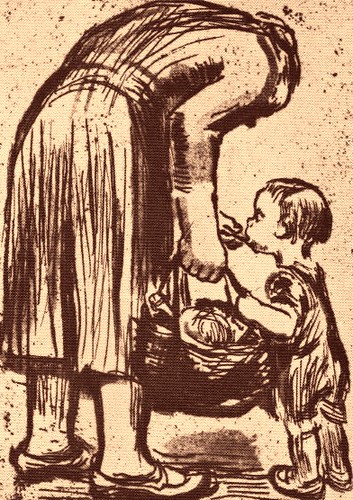
This print from German artist Kathe Kollwitz hangs in our living room. The mother's posture has always reminded me of a priest bending down to offer the consecrated bread: "Take, eat....the bread of heaven...." Bread, it seems to me, must be the food of angels.

Today my workshop at the prison was canceled because the women were quarantined, so I sat in the living room across from this print and read Gilead, by Marilynne Robinson. There's a passage where the narrator recounts a childhood memory of watching the grown-ups deal with a burned-down church, salvaging what they could, burying destroyed Bibles and hymnals. At one point, his father "brought me some biscuit that had soot on it from his hands.... I remember my father down on his heels in the rain, feeding me biscuit from his scorched hand, with that old blackened wreck of a church behind him.... I remember it as communion, and I believe that's what it was."  The passage made me weep, remembering times of sharing bread and blessings with my young children years ago, and all the years of loss and gift and blessing since then. The accumulated years of bending down to feed a child began to prepare me for offering the Eucharist. Sometimes it's hard to know which is more sacred.

This Sunday's gospel tells my favorite story in all of Scripture: Jesus' post-resurrection invitation to breakfast on the beach, where he is cooking fish and bread over a charcoal fire for his confused and uncertain disciples. On the hillside for 5000 people, at his Last Supper in the upper room at Passover, on the road to Emmaus, on the beach -- in all these places, before and after his death and resurrection, our Lord took bread, blessed it and shared it.

In our call to follow in his Way, it seems to me that baking bread with our children, filling the home with its aroma, then sharing it with them offers wordless blessing. There are a lot of really lovely bread recipes out there, but even buying frozen bread dough and starting with that will work its holy magic.

So sometime during this Easter season, bake bread with your children, knowing that it carries within it deep and inexplicable blessings for the home, for the children, and for you. -- And, in case you worry, the blessings far outweigh the carbs.

And, I can now report, baking bread also blesses a new home (especially when eaten with butter....)

Saturday, October 12, 2013

Golden October and Goblin Trees

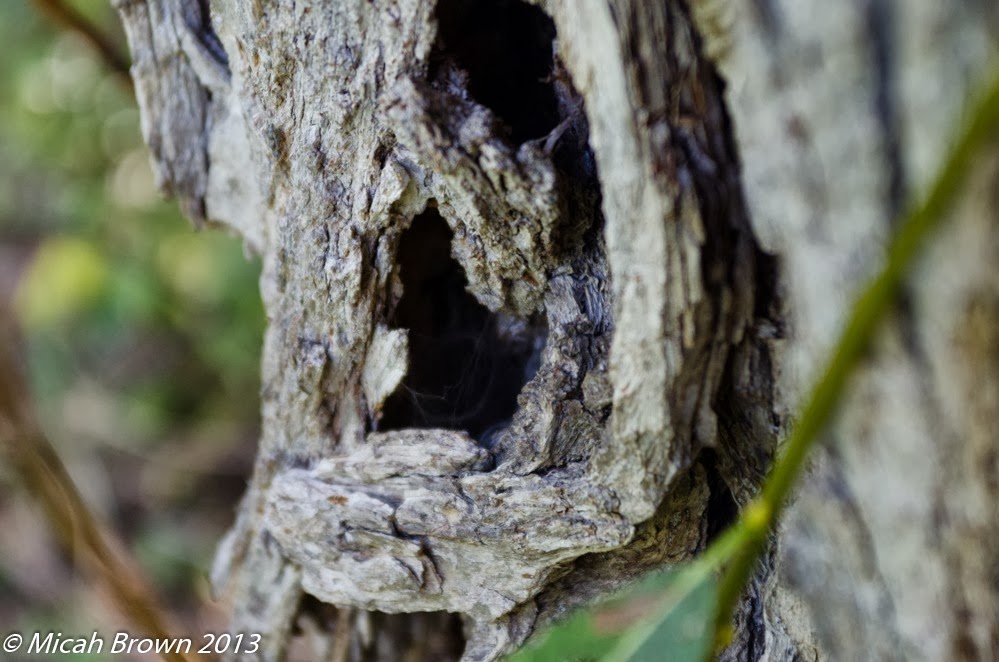
No stories this week, but plenty of knobby goblin trees. (Thank you!) Seems a perfect time of year to take the children out for a walk to look for beauty and blessings and quirky trees and places that goblins and elves and fairies might live. It makes a compelling reason to get outside and look around. These trees come from Maine, Arizona, Virginia, and New Mexico.  Have fun finding goblin trees in your own neighborhoods!

(And if you wonder what all this is about, check here.)


Monday, October 7, 2013

An outside autumn activity: for the birds!

Lots of churches celebrated St. Francis' Day this past weekend with the blessings of animals; at St. Paul's in Brunswick, Maine we had 10 dogs, a rabbit, a hamster, lots of stuffed animals, and the ashes of a beloved pet.

Behind the altar for the Family Service hung a banner that showed St. Francis surrounded by fluttering, multi-colored birds. The birds reminded me of the little girl's comment last week that "birds are angels," which would mean that the banner showed St. Francis surrounded by angels. A happy thought!

                                                   from Jennie's Hat, by Ezra Jack Keats

St. Francis and angels and birds: what a lively trinity! In celebrating both St. Francis (this week) and St.Michael and All Angels (last week), birds really do figure prominently. For example, on Michaelmas, which occurs just five days before St. Francis Day, farmers used to scatter grain for the wild birds in oder to bring good luck to their farms.

So I thought I would share with you a bird-centered activity that my kids used to enjoy when they were little: making bird feeders and then hanging them near-by.

This is incredibly easy (also somewhat messy). You need:

peanut butter (shortening will work if you have a child with peanut allergies)

pinecones that you collect (its own adventure!) or corn cobs or even popcorn balls

bird seed

yarn or string for hanging

What to do:

Put down newspaper as a work surface.

Have the children spread peanut butter all over the outside of the pinecones.

Pour the bird seed into a pan, and let the children roll the pinecones around in the seeds. Seeds will stick to the peanut butter.

Tie a long piece of yarn or string to each pinecone.

Go for a walk to find the right place to hang your bird feeders.

As you walk, or while you work to make the bird feeders, you could teach at least the first two verses of  "All things bright and beautiful." You can find a simple version with lyrics here, or another with a slightly different melody and gorgeous accompanying pictures

It's worth celebrating the bright and beautiful world of autumn, and by making these very simple feeders you teach your children to care for all God's creatures.

And if the little girl is right, you'll be feeding angels!