Sunday, June 30, 2013

Iron rails and flower soup

(Note: the post next Monday -- the second Monday of the month -- will be a Goblin-to-Go story, so it's time to send suggested  "ingredients" for the story.)

I didn't mean to write about another book this week, especially another book about trains, but my husband and I took the train to Boston last Monday for our anniversary, and I got to thinking about one of my least favorite children's stories: Tootle.


"The path to my fixed purpose is laid with iron rails, whereon my soul is grooved to run," says Captain Ahab in Moby Dick. I love that book -- wrote my graduate thesis on Melville -- but that doesn't mean I approve of Ahab's iron-railed pathway. Inflexibility can be dangerous and damaging.

It's why I dislike Tootle so much, the Little Golden Book about the train engine who was learning how to be a big locomotive, but who kept leaving the track to go play in the meadow among the flowers and the butterflies and the horses, ending up (if I remember correctly) with flowers in the soup bowls -- until he was finally coerced into conforming, agreeing to "stay on the rails no matter what." No more creative play. No more exploring beyond the fixed rails.


When my boys were little, I wanted them to become themselves, not somebody else's idea of who or what they ought to be, so I stopped reading that book. My mother and I got into an argument over it; she insisted that a train belongs on the tracks, and that people, too, need to figure out where they belong and what they are meant to do, and live accordingly. I suspect some of our contention had to do with generational differences: she grew up during the Great Depression, whereas I was a child of the '60's. (One of the illustrations does show Tootle looking a lot like a flower child of my generation.) 

Older now than my mother was then, I begin to understand her reasoning: after all, I did want the Amtrack Downeaster to stay on the rails last Monday; I do want my doctor to practice careful medicine; I want my priest to be a faithful pastor.  But the injunction to "stay on the rails no matter what" still seems to promote a kind of mindless, dangerous conformity.

And just as there turns out to be published commentary about sexism in The Little Engine that Could, last week's book (scroll through http://tigger.uic.edu/~plotnick/littleng.htm, with thanks to my dear friend Dina) there is also an article that talks about Tootle as an anti-gay book (see http://prospect.org/article/tootle-ex-gay-train), so it seems particularly appropriate to celebrate the Supreme Court's decision last week to strike down DOMA by questioning what becomes of the free-spirited Tootle. 

And, in spite of my book-bashing here, it's probably ok to read Tootle to our kids as long as it's balanced by plenty of other books with more openly creative and inclusive messages. That said, it's not one I will buy for my grandchildren.

Saturday, June 22, 2013

Engines and Elephants

Read to your kids.

That sounds pretty obvious, but I remember a workshop I attended over 20 years ago on "Language Acquisition" that made me aware that the best way to improve the reading skills of the less adept 17-year-olds in my classroom would be for someone to have read to them when they were little. (It made me fantasize about a sabbatical during which I hung out at laundromats and read stories to children between infancy and 3 years.)

If kids don't hear the written word spoken (as in reading books to them), they don't grow up with "sentence sense." They may have magnificent vocabularies from a highly verbal environment, but reading and writing will be more of a challenge for them than for their read-to classmates. Fourth grade is often when the gulf between the two groups becomes obvious.

Once we commit to regular reading, there's the next question: what books are best? Children's picture books can be like poetry in their condensed clarity and precise choice of words, and there are plenty of really wonderful ones out there. But in the end, don't worry too much about "quality" -- I had a professor who said (about adults, but it works for kids, too) that "Readers of trash have taste that can be improved; non-readers have no taste." It's a pretty harsh-sounding statement, but I find it also a really generous one. The basic message is:  just read.

Meanwhile, in connection with "what to read," I want to share a story about one of my kids' favorites. I was standing in line at the library to check out The Little Engine that Could, one of the classics, for my two little boys, when the woman behind me said, "You shouldn't be reading that to your kids. It's sexist."

"But it's got a female protagonist," I responded. "The little engine is a girl! I thought it would be good for my boys to know that girls can be strong, too."

"Yeah," the other mom responded, "but look at how the men are represented. First, what's the broken-down train carrying?"

"Food and toys for the children on the other side of the mountain."

"Right," she went on, "women's work.  And when the big male engines are asked to help, they say they're too busy, too tired, or too important to bother. What an image to give kids about adult males, that children aren't worth helping! It's got to be a female engine that cares enough to do the job."

I checked the book out anyway, that day and many times after. But off and on I would hear that strident voice telling me it was a bad choice.

Fast forward 20 years. In my 11th grade American Literature classroom, on the last day before Christmas vacation, I often asked students to bring in their favorite story books from childhood and we'd read them aloud. I explained that we were honoring their "language acquisition" as children, but it was also fun. About a third to a half of the students would bring in a favorite. One year we still had time left when we'd finished all their books, so I asked them how many remembered The Little Engine that Could. Although no one had brought it in, most of them knew it. So I asked: "What color is the engine?"

"Red!" was the universal response.

"What gender is the engine?"

"Male!" they all said.

"Wrong on both counts," I said; "she is blue," and I told them the story of the irate mom. They just shook their heads.

That experience relieved any left-over guilt about reading that beloved book over and over to my own children. My students remembered the story line, the courage and persistence and determination of the little engine who not only thought she could, but actually made it over the mountain -- they weren't caught up in the gender or even the color. It was ok.

So again the message is: just read. Read lots, read often, and trust that the variety of books you choose will offer an enormous range of ideas and images. And if you still worry about The Little Engine that Could, balance it with the tender image of fatherhood in Horton Hatches the Egg.


Sunday, June 16, 2013

a light in the darkness


At the triennial deacons’ assembly last week in Williamsburg, what was meant to be an outdoor liturgy got moved inside because dangerously violent storms were predicted. The sky was still a hazy blue at 4 p.m. when the service began, but a few minutes into the Rt. Rev. Carol Gallagher's homily, the sky blackened and roared as trees outside the window bent sideways, then bowed to the ground. Torrents of rain suddenly threw themselves against the windows.

Then the lights went out.

Undeterred, the bishop finished her homily in the dark as the storm raged on, then invited everyone to get out their cell phones and finish reading the service by the electronic glow. We did. 

“Let there be light,” God said. And there was light. Now, light emanating from a cell phone certainly isn't what the writer(s) of Genesis had in mind, but it worked. The bishop's immediate response reminded us that in the midst of darkness and potential danger, we actually carried light with us. (Who would have thought that the Light of Christ could come from the light of a cell phone...) 

It took over 24 hours for power to be restored, and during that time I began to ponder how parenting (or grandparenting) can often require the same kind of good-humored, creative, and instantaneous flexibility that Bishop Gallagher showed. 

I don't think parents can avoid the dark times, whether from a two-year old's tantrums or a terrifying illness or the outrageous negativity of an unhappy teenager. My own tendency has always been to want the big fix, an end to the darkness, but that peculiar service-by-cell-phone-light was a reminder that sometimes we can find a small and immediate thing that doesn't quiet the storm or dispel the darkness, but that lets us function in the midst of it all. Sometimes just getting through is enough, just seeing the next word or the next step.

And it helps to have companions; a lot of little lights together make us less lonely and afraid. 

My favorite short story is Raymond Carver's "A Small Good Thing." It's a desperately sad story, but the deep truth it offers is that a single, small good thing can offer hope in the midst of horrendous events. If this is, for whatever reason, a dark and stormy time in your life as a parent, think about what small good thing might provide a little light, a little hope, a brief respite from the turmoil. 

Like those cell phones in our pockets that gave light to our prayers, probably what you need in order to take the next step, and the next, is already within reach. And if nothing else, prayer in the midst of darkness ultimately provides its own light.

Monday, June 10, 2013

Goblin-to-Go Story: beets (growing in a bucket), a three-legged stool, a helicopter, lemon sherbet, and a dirty fedora (size 7 3/4)


When the leaves of his tree shook with laughter, the green goblin knew that Elfie's light step had tickled the toes of the tree on her way up.

The wood elf was small as a fairy, but without wings. "Guess what?" she asked as she settled down next to him on his favorite branch. "I've just seen beets in a bucket!"

"Hmm," the goblin replied, scratching his green head,"isn't it early for beets?"

"Oh, I don't mean picked beets, beets planted in a bucket. On a back porch. I've seen flowers growing in buckets, but never beets!"


photo by Micah C. Brown

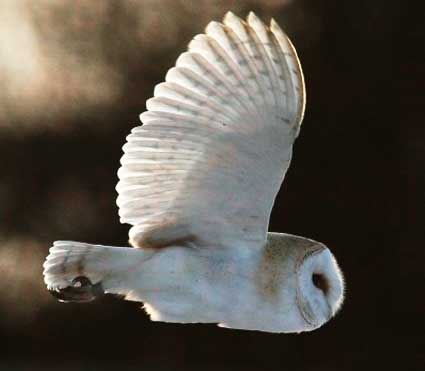
The full moon was sliding down behind the riverbank when suddenly a giant shadow drifted across it, wide wings and sharp talons heading straight toward the goblin's tree. With a soundless force that shook the branch, a barn owl landed next to them. He towered over them both.

"Morning, all," he said. "What's new with you?" Elfie ruffled his soft feathers and told him about the beets.

Owl listened without blinking an eye, then said, "A week ago when my hunting took me out beyond the last field, I flew home by way of the city, and I saw that way up on a seventh floor fire escape, someone has built a fairy house in a red bucket. Your beets reminded me."

"What fun!" Elfie said. "Can you take us there? I want to see it!"

The owl began to protest that it was too close to dawn, but the goblin said, "There's plenty of time. And besides, we haven't had an adventure together in ages."

So Owl bent down, and the elf and goblin clambered onto his back. Stretching out his great wings, he waited to catch the morning breeze, then off they went, soaring over the sleepy town, the winding river, fields, farms, another village, then the city itself. The green goblin had made occasional visits to children in the city, but the wood elf had never ventured there before. When they finally landed, she almost tumbled off the owl in her excitement because there on a three-legged stool, among all the other flowerpots on the fire escape, was the fairy house!


While Owl sat on the railing to keep watch, Elfie slipped through the front door into the fairy house, and Goblin set about testing its construction. "Somebody built this to last," he said. "It's weatherproof, and sturdy enough to withstand even the high wind of a helicopter going by."

"And beautiful!" Elfie added, poking her head out one of the tiny windows. "It has a bed, and chairs, and a table inside. This is way better than beets!"

She came out and sat down among some star-shaped flowers. "But fairies don't come this far into the city, so even though they could fly here, they won't. It's too bad."

The green goblin, meanwhile, was peering into a window. "The little girl who's asleep in there has fairy pictures on the wall," he said,  "and is wearing pajamas with fairies on them.  I do wish we could talk a fairy into living here." He sighed, knowing it would be impossible. Then his face brightened. "But you could!" he said, pointing to Elfie.

"I am NOT a fairy!" said the wood elf. "And besides, I can't fly, so I'd be stuck here, seven stories up in the air."

"But," said the goblin, whose job in life was to make people happy, "it's just your size. And you like it. Couldn't you stay for a little while, like a vacation, just a week? I could sleep among the flowerpots, and Owl here could check on us every night, couldn't you?" Owl nodded wisely. The green goblin used his softest, most persuasive voice: "Just a week?"

Elfie didn't answer.

"Ok, how about just one night?" the goblin went on. "Think about all the work the little girl put into this, and no one ever living here. It would be so sad." He sighed an enormous sigh.

Elfie burst out laughing. "Ok, ok, you win! Let's give it a try today. Just promise you won't leave me here alone."

The goblin promised. Owl agreed to return that night, then took off into the brightening sky.

Now on summer mornings, Keesha liked to take her breakfast out on the fire escape. It gave her a chance to check on her fairy house. Even though it had stayed empty for such a long time, she still hoped, every morning. She opened the window, put her orange juice and oatmeal on the windowsill, and climbed out.

She heard a happy gasp, and saw a green face peeking around her mother's flowers. "Is that maple and brown sugar oatmeal?" the voice asked.

Keesha knew not to talk to strangers, but this stranger was only the size of a large cat, and he was green like Kermit the Frog. "What are you?" she asked. "You're too big for my fairy house, but too small to be a person. And you're green."

"I'm a goblin," he said, "and my favorite breakfast in the whole world is instant maple and brown sugar oatmeal."

"What are you doing here?" Keesha asked.

"I've brought a friend to visit your fairy house," the goblin said. "May I have some of your oatmeal?"

"You brought me a fairy!" Keesha exclaimed. "Oh, where is she?"

Elfie stepped out of the fairy house, her eyes sparkling. "I'm here, but I'm not a fairy. I'm a wood elf."

Keesha looked at Elfie, dressed in the soft colors of the forest, standing by the house Keesha had built with her own hands, and she smiled a smile that lit up the whole morning. "I don't care what you are -- just that you're here! You came! Someone came to my house!" She put out her hand, and Elfie stepped gracefully onto it. Keesha turned to the green goblin. "Thank you," she said. "And yes, you may have all of my oatmeal! I can get myself some more."

Turning back to Elfie she asked, "And what do you like to eat?"

Elfie had rarely eaten people food, so she told Keesha to bring whatever she liked best. The goblin was just polishing off the oatmeal when Keesha came back through the window carrying an egg cup with a small scoop of lemon sherbet and the tiniest doll spoon the goblin had ever seen. Elfie laughed as the sherbet skittered around in the cup while she chased it with the spoon, and she laughed again with delight when she tasted it.

"It's the sweetest thing I've ever eaten!" she said. "Do you have this for breakfast, too?"

"Oh, no, it's supposed to be dinner dessert," answered Keesha. "Don't tell my mum."

The green goblin set a gentle hand on Keesha's arm and said, "We'd best not let your mum know that we're here. Grown-ups don't always understand. We can be your secret for now."

Keesha nodded wisely. "She'll be on the phone all day anyway. She answers questions for something called Amazon that I thought was a river but she says is books."

The green goblin curled up for a nap inside an old gray fedora that had been used to hold garden tools (he took the tools out first). The last thing he saw before he fell asleep was Elfie curled up in the palm of Keesha's hand while the two of them made plans to build a front porch for the fairy house.




Monday, June 3, 2013

Bread & Stories & all that Jazz: including an invitation and a recipe

When we were growing up, my sister used to play Christmas carols on the piano for our extended family; she was the only one who knew how. Somewhere there's a photograph of her wearing earmuffs because the rest of us sang so badly that if she listened to us, we threw her off key.

In spite of a limited musical background and zero musical talent, when I came across quantum physicists describing the interconnectedness of the universe in terms of music -- particularly jazz -- it made perfect sense. As Margaret Wheatley writes, "We listen carefully, we communicate constantly, and suddenly there is music...the music comes from somewhere else, from a unified whole...." (right, that would be God). There's also the improvisational nature of jazz, the way each musician influences and inspires the others. I like that image.

But what I like even better are the quantum metaphors that use weaving and braiding to explain the interconnectedness of everything. (Remember Jesus saying that what we do for the least among us, we do for him.)  Physicists say that every time -- every time! -- we make a decision, take action, even have an intention, we are actually tugging at the web of reality and relationships that make up the universe.

These weaving metaphors are why, I realize, I take such delight in gathering disparate ingredients for the Green Goblin stories: I get to take those individual threads and weave them into a single story. The story connects all those who  offer ideas, and all those who read the story. The story becomes a small quantum tug on the fabric of the universe.

It's also, I suspect, why my favorite bread recipe is challah, the Jewish braided bread that is served especially on the Sabbath. My favorite recipe takes seven separate strands to create a single loaf. (I think here of 1 Corinthians 10:17: "We who are many are one body, for we all share the one bread.")

So here is my invitation: ask your children to think up something they would like in next week's Goblin-to-Go story, and send it either in the comment box below, or via Facebook (for those of you connected there....).  Here's a picture of the goblin's tree in case they want to know where he lives:

And here is my favorite recipe for braided bread:

1 1/4 c. warm water
2-3 T yeast (or 3 packages)
3 T sugar
3 T honey
1/3 c. olive oil
2 large eggs, slightly beaten
5 1/2 - 6 c. flour
1 T salt
and for the egg wash: 1 egg yolk mixed with 1 T milk
optional: sesame seeds or poppy seeds to sprinkle on top

In a large bowl, mix water, yeast, sugar, and honey. Let stand until yeast bubbles. Stir in olive oil and eggs. Gradually stir in 5 cups of flour plus the salt. Turn onto a floured board and have the children help knead in the remaining flour as needed until the dough is not sticky any more, but smooth. (Try not to get it too stiff, but keep it pliable.)

Put the dough into a greased bowl, cover, and let rise until doubled in bulk, which can be anywhere from 35-50 minutes, depending on warmth.

Invite the children to punch the dough down and knead it a couple of times. Pull out a ball of dough about the size of small grapefruit and set aside. Divide the remaining dough into four parts and have the children roll each one into a strand about 20 inches long.

Put the four strands side by side lengthwise on a well-greased baking sheet and pinch together at one end. I always find this part a little complicated, but depending on the ages of your children, they could probably manage just fine: with the strands facing you (or whoever is doing the braiding), take the strand on your left and place it over the second strand, under the third, and over the fourth. Repeat, starting with the second strand on your left. Continue with the third and fourth strands, until the braid is complete. Pinch the ends together.

Now take the smaller piece of dough and divide it into three parts. Have the children roll these out into three 10-inch strands. Lay them side by side, pinch one end together, and have the children make a classic three-part braid. Pinch together and place on top of the large braid.

Cover and let rise in a warm place till doubled. Preheat oven to 350 degrees. After the bread has risen, mix together the egg yolk and milk and gently brush it over the risen bread dough, top and sides and everything. If you like, you can then sprinkle poppy seeds or sesame seeds over the top, although when my children were little they liked it best without seeds.

                             Bake for 25-30 minutes. Serve warm, or cool or a wire rack.

This bread is best broken apart by hand as everyone pulls off what they want, though it can be sliced once it's cool. With butter, this bread is one of my  favorite things to eat in the whole world.

The traditional Jewish blessing over the bread is: "Blessed are you, Lord our God, King of the universe, who brings forth bread from the earth."

Consider reading next week's Goblin-to-Go story while eating braided bread (with butter) and listening to jazz....


Monday, May 27, 2013

Babies, Goblins, and Quantum Mechanics: That which is observed changes


(Note: next week I will ask for ingredients for a Goblin-to-Go story, so be thinking....) (If this is an unfamiliar request, see earlier posts from May: "Jesus Told Stories"  and  "A Goblin-to-Go Story".)


Observing our granddaughter take delight in using a spoon for the first time, watching our grandson fling himself into the pool with delicious abandon – what joy! As grandparents, my husband and I are happy observers of these two babies, who are utterly secure in their awareness of being beloved children of attentive parents. And quantum mechanics assures us that being seen as objects of love and delight by their parents and grandparents is actually helping form them into loving and delightful people. "That which is observed changes."

Once again, it seems to me, science rephrases what Christianity has always known.

My husband says he never worked as hard in school as when he had his baseball coach as his teacher in eighth grade -- knowing that he was being observed by Red Beal compelled him to become a better student. And I remember back when I was teaching high school English, two of my colleagues chronicled the reading habits of a diverse group of sophomores. By the end of the year, all of the  students in the study were reading far more than their classmates of similar academic background. My colleagues realized that simply knowing that they were being observed made the students more conscious of their own reading habits – and unconsciously changed them. Again: "That which is observed changes."


In the children's book The Goblin Under the Stairs, Mary Calhoun describes how differently three different people see the goblin that has set up residence under their stairs: looking at the goblin through a knothole, the boy sees a frisky little man, his mother sees a neat little servant elf, and his father sees a wild-haired goblin. When my children were growing up, they loved that book, but now I realize that The Goblin Under the Stairs is more than  just a story. It actually demonstrates quantum mechanics: how Calhoun’s goblin looked depended on who was doing the looking. 

Quantum physicists ponder how the mind of the observer directly influences the properties of whatever it observes. In other words, "You get what you see." They may be talking about waves and particles at the atomic level, but it works with Calhoun's goblin, and it works with actual children, too. If we see our children as beloved treasures, that's what they are. If we see them as problems to be solved, they are problematic. If we see them as failures, they will fail. Now that's not to deny that all children have their share of problems, some of which may be beyond our ability to solve. And, as I wrote back in January, children need the experience of failure in order to develop character and courage. (See the post: "Let the Little Children Suffer? Sometimes...") But having problems and experiencing failure is very different from being observed and identified by them.

All of this leads me back to our primary identification as beloved children of God, and it makes me wonder: how are we changed by God's compassionate observation of us? How might we live if we truly believed that God gazes on us with unconditional love? What added security might we offer our children if we could help them know that God watches over them and loves them, no matter what? 

It's a paradigm shift for me to believe that the way I see something or someone actually affects what I observe. It is only by claiming my status as a beloved child of God, flaws and failures and problems and all, that I can begin to live into the responsibility involved. I can only do it by the grace of God.

Today's message: gaze on your children with love, as God does. It will change them.


Monday, May 20, 2013

Pentecost: an epiphany and an activity


AN EPIPHANY
Yesterday at church, even though it was Pentecost, I had an epiphany. 

Every week before the Family Service begins, children choose a task they would like to do, such as lighting the candles on the low table we use as an altar, or passing the collection basket, or bringing up the bread or wine or water while one of the deacons sets the table for Communion. Yesterday, Jacob chose to bring the water.

As part of the homily for the Family Service, I had brought in a tea light candle,  a plush stuffed dove,  and a small electric water fountain as ways of talking about the Holy Spirit. First we blew on our hands to feel invisible wind, which is one way Scripture describes the Spirit. Then we talked about how “tongues of fire” rested on the disciples at Pentecost, and stuck out our tongues to see how a flame really is tongue-shaped. Next we passed around the dove for everyone to hold.

And then I began to talk about water and the Holy Spirit, and I invited the children to come and feel the water as it burbled in the fountain.

Jacob heard the word “water,” and instead of coming to the fountain, he went straight to the credence table and brought me the cruet of water for Communion.

“Oh!” I realized. “I’ve never thought of the water we add to wine as the Holy Spirit! That would mean that when I pour water into the cup of wine, I’m adding the Holy Spirit to what will become the blood of Christ. I will never think of it the same way again!”

No wonder Jesus told us we need to become like little children! Thank you, Jacob!


AN ACTIVITY
For those of you who would like a lively activity to do at home  during this week following Pentecost Sunday, begin by cutting strips of craft or butcher paper into one to two foot lengths, about three or four inches wide.  Then have the children use red, orange, and yellow markers to color both sides of the paper to represent fire. Once they finish, show them how to shake the paper to make the sound of “strong wind blowing” just like when the Holy Spirit first came to the disciples.


Then you can teach them the following song, which uses the tune of “If You’re Happy and You Know It.”  If you're not sure of the tune, you can find a lively version at: <http://www.youtube.com/watch?v=FrsM9WggC>

Be sure the children have their colored paper “wind” strips with them for the last verse:


            If the Spirit comes to you, then clap your hands.
            If the Spirit comes to you, then clap your hands.
If the Spirit comes to you,
You can tell the world good news.
If the Spirit comes to you, then clap your hands.

Additional verses:
  • If the Spirit comes to you, then stomp your feet.
  • If the Spirit comes to you, then nod your head.
  • If the Spirit comes to you, then turn around.
  • If the Spirit comes to you, let’s hear some wind (get them to shake their paper}.

You and the children can make up other verses if you’d like.

For more activities, check out this website from Australia (especially the popcorn for Pentecost):


Monday, May 13, 2013

A Goblin-to-Go Story: worms, a cat, a secret, a red balloon, marigold seeds, a left handed lug wrench, a snickerdoodle


Note: this is the first Goblin-to-Go story on this blog. Normally the list of "ingredients" will be limited to five, but since seven people sent ideas for this first story, I decided to incorporate something from everyone. I'll solicit ideas again in early June for the next story, from which I'll randomly choose five. And starting next month, you'll get to see more of the goblin's tree, and to meet one of his friends. (If this is all new to you, check out last week's post.) Meanwhile, I hope you have fun creating stories with your own children!

Photo by Micah C. Brown (me with the goblin's tree)

The green goblin sat on a branch outside his front door, watching robins hunt worms in the grass below. Under a near-by lilac bush, the surreptitious swish of a tail caught the goblin’s eye just before a gray cat raced toward the hungry birds.

“Must be breakfast time!” the goblin exclaimed. “I’m hungry, but not for worms or birds!”

He went back through his front door – a knothole in a knobby old tree – and climbed the staircase that curved around inside the trunk, all the way up to a smaller knothole where he could see out over the whole neighborhood.

The sky was already turning pink with pre-dawn light, but most of the houses were quiet on this Saturday in late spring; even the children were still in bed. “Maybe,” the goblin thought, “I can get two jobs done – and that would mean two breakfasts!” He liked that idea.

Everyone in the neighborhood knew about the green goblin, though none of the grown-ups had ever seen him. They just knew that, like most goblins, he would do secret, unexpected jobs for them, as long as they would, in return, leave out his favorite food: instant maple and brown sugar oatmeal. No one ever knew where he might go or what he might decide to do, so everyone kept a supply of oatmeal on hand, just in case.

This morning as the goblin squeezed under a fence, he saw a red balloon, left over from Teddy’s birthday party, caught in the branches of a maple tree. He scrambled up the tree, untangled it and brought it down, then tied it to Teddy’s back door.

At Abby’s house, he saw a packet of marigold seeds abandoned on the edge of the garden. Yesterday, when the phone had rung and Abby’s mom jumped up from gardening to answer it, she had twisted her ankle so badly that she had to spend the rest of the day lying on the couch. “I’ll plant those for her!” the goblin said. So he did, dropping them carefully one by one into the trench she had already dug.

Then he suddenly wondered, “What if she doesn’t realize the seeds have been planted?” He had just gone into their garage to look for something to put the empty seed packet on when he heard the back door open, and Barnabas, their great big golden retriever, came bounding out.

“Uh-oh!” the goblin gasped and quickly climbed up on the tool shelf to hide. Barnabas was friendly, but his bark could waken the whole neighborhood. Barnabas raced around the yard a dozen times, then nosed open the garage door. The goblin held his breath and listened to the panting dog.

“Breakfast, Barnabas!” he heard Abby call, and the big dog went racing back inside. The goblin quickly grabbed the closest tool, which happened to be a rusty left-handed lug wrench, and scooted back out to the garden. He pushed the handle deep into the soft earth, jammed the empty packet of marigold seeds on top to show where they’d been planted, and clambered over the fence into the next yard.

This yard was neat and tidy, carefully tended by Dorothy and Henry, who had lived there as long as anyone could remember. No work for a goblin here. The sun was just now rising, slanting its light through leaves and around houses. The goblin ran his hands through his hair, patted his empty stomach, and thought, “What next? Where should I go? I want that second breakfast, and I don’t think the balloon is enough to earn me one.”

Then heard a cheerful humming. Following the sound, he turned the next corner and came across two-year old Sam, wearing his Spiderman pajamas and humming to himself as he balanced on the edge of the curb. No grown-ups were in sight.

“What are you doing out here by yourself?” the goblin asked.

“I opened the door all by myself!” Sam said proudly. “Mama and Papa are sleeping.”

“Oh dear, oh dear!” said the goblin. “It’s not safe out here alone.”

“You’re here!” Sam said.

“But I can’t stay.” The goblin thought and thought, and then he had an idea. “I need your help. Can you tell your mama and papa that the green goblin wants oatmeal? Can you say that to them?”

“Goblin wants oatmeal,” Sam replied.

“Yes!”

“Goblin wants oatmeal!” Sam called out.

“Shhh, not yet. Let’s get you back inside first.”

So the goblin walked Sam home. Together they climbed the front steps, then the goblin lifted Sam so he could ring the front doorbell. Ding-dong, ding-dong, ding-dong. He rang it three times. Then the goblin set Sam down, tucked himself under the bushes, and watched.

Sam’s sleepy mom opened the door, took one look at Sam standing there in his pajamas, scooped him up into her arms, and asked in a frightened voice, “How did you get out?”

“I opened the door myself!” Sam said proudly. Then just as the door was closing, the goblin heard Sam say, “Goblin wants oatmeal!”

And sure enough, later that morning Abby’s dad and Sam’s mom each made instant maple and brown sugar oatmeal and put it on their back porches for the goblin to find, so he got his two breakfasts after all!

And on his way home as he passed Teddy’s house, he saw by the back door where he had tied the red balloon, someone had left him one giant snickerdoodle, so he even had breakfast dessert as well!


Monday, May 6, 2013

Jesus Told Stories


When people asked Jesus a question, he often answered with a story, and he usually invited his listeners to interact with him in the telling or interpreting. As Christians, we are often called "people of the book" because we are part of a faith tradition grounded in stories.

So it makes sense that we should tell stories to and with our children. I'm not talking today about Bible stories, or even about books, but about stories that you and the children create together. It's a way of deepening the imagination of our children,  and it's fun.

When I was a little girl, my mother used to make up stories about a green goblin that lived in the rough of a golf course. He had been a lonely goblin until he was befriended by a golfer (not a very good golfer, but a very good man) who began to take the goblin home to play with his children and to share family meals.

When I was a little older, I fell in love with a book that had belonged to my father when he was growing up: Made-to-Order Stores by Dorothy Canfield (you can see by the photo just how well-loved that book has been over the generations), in which a little boy named Jimmy would come up with five ingredients for a story, and someone in the family would create an impromptu story using those ingredients (some examples: a sack of potatoes, false teeth, a busted bicycle, a hole in the ground, a polar bear). He also always wanted a little boy in the story.

When my own children were young, I combined those two -- the green goblin and the made-to-order stories. Jeremy and Micah would take turns coming up with ingredients for stories about a green goblin. Their green goblin lived in the trunk of a gnarled old tree instead of on a golf course, and (because it was their favorite breakfast) he ate instant maple and brown sugar oatmeal, which (in the stories) we would set out for him. To this day, when I see a particularly gnarly tree, my first thought  is, "Oh, a green goblin tree!" and oatmeal is always goblin food. Over time, the green goblin acquired friends: a wood elf (small enough to live in those fairy houses I suggested you build), and an owl, and they often had adventures together.


(This is a very simple fairy house I came across on Monhegan Island, Maine)

To model how this story-telling works,  I'm inviting you to send ingredients (from you and / or your children), and I'll choose from among them to come up with a new story. I call these "Goblin-to-Go" stories, because you can take them -- create them -- anywhere: on car trips, in waiting rooms, at the playground, while fixing supper, as part of bedtime.

Have fun thinking up ingredients -- and then be sure to send them!

Monday, April 29, 2013

Earth Season

photo by Jaye Wile Sewall
 
Earth Day may have been last week, but  it seems to me that all of spring is Earth Season, and I want to stay playing outside.

Jesus spoke often of the natural world: lilies of the field, fig trees, fish, seeds, sheep, sparrows, wheat fields, wolves, wind, and water. The psalms call us to "worship the Lord in the beauty of holiness," and that's not just about stained glass windows and exquisite liturgy but about seeing God's hand in all the complex beauty of the universe, down to the flowers in our neighborhoods, the birds tending their nests, and, as I said a week ago, the soil itself. Genesis tells us that when God looked at all of creation, God saw that it was "very good." We need to be out there in the midst of it with our children.

So today I'm going to go back to my suggestion of last week that we build fairy houses with our children: it gets them playing in the dirt, hunting for natural objects to help build and beautify the houses they make; it introduces them to the different textures and weights of such things as stones and sticks, leaves and flowers, bark and shells -- and it satisfies their need to "make something." (Theologians write about how human beings are "co-creators" with God; all you have to do is watch  children draw or build to know the truth of their inherent creativity.)

For those of you with access to sand beaches, you've probably already built sand castles with your children. Fairy houses are an inland version. The only "rule" is that you are supposed to use only natural objects in the creation of these houses (although my very favorite book about a fairy house is one from my own childhood: Twig, by Elizabeth Orton Jones, about a little girl who makes a fairy house in her small back yard using an empty tomato can that she sets under a dandelion, so I would say use whatever you find in your own environment....).

The fairy house pictured above is one that my sister-in-law built in her garden -- children aren't the only creators, after all -- and you can see her exquisite attention to aesthetic detail.  When I took my grandson, at about nine years old, to the pine grove on Mackworth Island to build a fairy house, he was interested in the solidity of his architecture, in his sturdy stone floor and square windows and solid walls. He didn't care about the shells and flowers the island offered; he built to last. Clearly, everyone's vision and implementation will be different.

Doing this kind of creative play in the natural world may be one of the best prayers we can offer, among the best gifts we can give to the children in our care. So go play in the dirt again!

(And, if your children do make fairy houses, send photos so we can all see them!)


Monday, April 22, 2013

Holy ground


Today is Earth Day.

Earth Day closely follows the anniversary of explosions that destroyed the lives of participants and spectators at the Boston Marathon, and it reminds us of the violence we humans do to this good Earth as well as to one another.

How do we raise children on this fragile, damaged planet, amid the chaos caused by human violence? Despair and depression can overwhelm us and pull even the littlest ones into our downward spiral. The ways in which we respond -- what we do today and in the days ahead -- will leave its imprint on the children entrusted to our care.

So on this Earth Day, I'm going to make a simple suggestion:  go play in the dirt, and (quite literally) ground yourself and your children in the earth. 

In case you haven't been following recent research reports in journals such as Neuroscience or Discover or various gardening magazines, dirt is the new healing agent.

Some researches call dirt the "natural antidepressant" because bacteria found in it (Microbacterium vaccae) triggers the release of serotonin in our brains, and as Robyn Francis writes from Permaculture College Australia,  "Serotonin is a happy chemical, a natural anti-depressant that strengthens the immune system." In other words, playing in dirt is good for both soul and body.


The bombings in Boston -- bombings around the world --  are horrifying reminders that, even with the best intentions, we can't protect our children. The only response I know is to give our children and grandchildren the best life we can. 

Give them the Earth on this Earth Day. 

A few ideas:

* My first instinct was to say, "Plant something, whether in your yard or in a container on your windowsill," but if your children are too young to care yet about gardening,  just give them a small shovel or sturdy spoon and a container of some sort, and find them a patch of dirt to dig around in.

* Build a fairy house with found objects from your yard or neighborhood (if this concept is new to you, google "simple fairy houses" for a wide range of options)

* Create a "construction site" in the dirt and invite the children to dig a foundation; if you have toy trucks, bring them out, too, to help with the project.

* And here's a link to 50 suggested Earth Day activities with children:  <http://tinkerlab.com/fifty-earth-day-activities/>


Thursday, April 11, 2013

Bread and Blessings

If you want to sell  your house, I was once told, bake bread before potential buyers come; it makes a house smell like home. Ah, I thought, so if we actually want our homes to smell like home even when we don't want to sell them, we should bake bread anyway? Of course.

This print from German artist Kathe Kollwitz hangs in our living room. The mother's posture has always reminded me of a priest bending down to offer the consecrated bread: "Take, eat....the bread of heaven...." Bread, it seems to me, must be the food of angels.

Today my workshop at the prison was canceled because the women were quarantined, so I sat in the living room across from this print and read Gilead, by Marilynne Robinson. There's a passage where the narrator recounts a childhood memory of watching the grown-ups deal with a burned-down church, salvaging what they could, burying destroyed Bibles and hymnals. At one point, his father "brought me some biscuit that had soot on it from his hands.... I remember my father down on his heels in the rain, feeding me biscuit from his scorched hand, with that old blackened wreck of a church behind him.... I remember it as communion, and I believe that's what it was."  The passage made me weep, remembering times of sharing bread and blessings with my young children years ago, and all the years of loss and gift and blessing since then. The accumulated years of bending down to feed a child began to prepare me for offering the Eucharist. Sometimes it's hard to know which is more sacred.

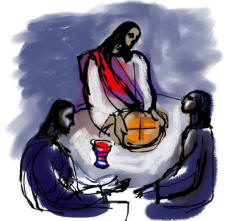
This Sunday's gospel tells my favorite story in all of Scripture: Jesus' post-resurrection invitation to breakfast on the beach, where he is cooking fish and bread over a charcoal fire for his confused and uncertain disciples. On the hillside for 5000 people, at his Last Supper in the upper room at Passover, on the road to Emmaus, on the beach -- in all these places, before and after his death and resurrection, our Lord took bread, blessed it and shared it.

In our call to follow in his Way, it seems to me that baking bread with our children, filling the home with its aroma, then sharing it with them offers wordless blessing. There are a lot of really lovely bread recipes out there, but even buying frozen bread dough and starting with that will work its holy magic.

So sometime during this Easter season, bake bread with your children, knowing that it carries within it deep and inexplicable blessings for the home, for the children, and for you. -- And, in case you worry, the blessings far outweigh the carbs.


Saturday, March 30, 2013

Easter and Meals


            The Rev. Dan Warren has often commented that the sound of dishes rattles through the New Testament. Jesus was forever sharing meals with people. Undoubtedly his most famous meal is the Last Supper, when he took bread and wine and sanctified them as his own body and blood.
            Recall for a moment that Last Supper.  Think of the intimacy of Jesus washing the disciples’ feet, and then his gift of the Eucharist -- and then also remember that this was the last meal of a condemned man.  He tells the disciples up front, “I have earnestly desired to eat this passover with you before I suffer.” -- I want to eat with you, my friends, before I die.
            Hearing this, I think of the families I used to visit when I was a pediatric hospice chaplain.  How often the children would ask parents to take them out to a favorite restaurant!  Gathering with the family around a table away from the medical paraphernalia of a terminal illness was their deepest desire.  Like Jesus, they knew they would die, condemned by their disease or their condition.  Yet, also like Jesus, they understood shared meals as a celebration of life, as a kind of sacred bonding.
            I love the post-resurrection story of Jesus cooking breakfast on the shores of the Sea of Galilee.  When I think of these children, I like to imagine not a grand banquet, but Jesus waiting for them on the other shore, cooking their favorite breakfast.
            My prayer for all of us this season is that we find time to share a special family meal, to celebrate well, to rattle our own dishes and give great good thanks for this life, and the life to come.
            

Saturday, March 23, 2013

Easter Family Liturgy


Holy Week offers an astonishing array of human experience: celebration and shared meals, betrayal and loneliness, suffering and death, grief and guilt, sacred mystery, awe and wonder and joy beyond our capacity to explain. It’s the heart of our salvation history, the Christian journey through death to new life. I hope you and your children are able to take part in some of the services that follow Jesus through his Passion.

What I’ve chosen to offer here out of all this array are suggestions for sharing a simple celebratory “Festal Meal” for Easter, incorporating some of my earlier suggestions for the season.

First, prepare the table. An Easter table should have a profusion of flowers as a centerpiece. If you are lucky enough to have flowers already growing in your yard, invite the children to help pick some. Here in Maine, a recent snowstorm means we’ll be having a “white Easter” so no flowers of our own, but even the local grocery store offers rows and rows of colorful flowers, so you can take the children on a special trip to choose their favorites.


As a way of marking where everyone will sit at the table, use the decorated containers of wheat grass (from February16, 2013 post), topped with a colored egg (February 23). 
           
Put bells at each person’s place, and have a candle for an adult to light at the start of the meal.

If you have time to make hot cross buns (March 8), there’s a special time at the start of the meal to eat them, but any bread, rolls, biscuits, or other grain-based option would also be a fine accompaniment to singing “Now the Green Blade Rises” as part of the short family liturgy (see below).

Once you’ve prepared the table, it’s time to prepare the children by teaching them the appropriate responses and gestures that go with the prayers (see the meal itself);

·       Teach them when they respond, ”God was with them,” to stretch out their arms, palms up


·       Teach them when they respond, “God is with us,” to hug themselves by crossing their arms and putting their hands on opposite shoulders.


·       After each blessing, teach them to respond: “Amen.”

And if you haven’t yet taught them “Now the Green Blade Riseth” (February 16), consider doing so now, even if there’s only time to learn one verse. The children could then teach any grown-ups who haven’t yet learned it. If your children are old enough to read, you could even print out copies of the lyrics for everyone.

Feel free to simplify the liturgy as feels right for your family, even down to using just the blessings at the end. Any small good thing we do at home to nurture our children’s faith blesses them, and us.


Festal Meal Liturgy for Easter


An adult should light the candle and say: The Light of Christ.

Everyone:  Thanks be to God.

Adult:  Even when Jesus died on the cross and his disciples ran away because they were scared,

Children (with arms outstretched, palms up, demonstrated by an adult):  God was with them.

Adult:  Even when we are sad or scared,

Children (with arms crossed, hands on opposite shoulders as though hugging themselves, demonstrated by an adult): God is with us.

Adult:  When the women found the empty tomb on Easter morning and knew Jesus was alive,

Children (arms outstretched):  God was with them.

Adult: Whenever we are surprised by joy,

Children (arms crossed):  God is with us.

At this time, the adults should lead the children in ringing their bells to acknowledge and celebrate  Jesus’ Resurrection by making a joyful noise. Then all should join in singing “Now the Green Blade Riseth,” accompanied, if available, by tambourines and/or drum, or just the bellss. Afterwards would be an appropriate time to share the hot cross buns, reminding the children how the plain bread of sorrow became the sweet bread of Easter, or how grain is what’s used to make bread.  After a suitable amount of time for eating buns, an adult should ring a bell to recall the children to the liturgy.

Adult: As we share this Easter meal together,

Children (arms crossed):  God is with us.           

Adult:   And now may God the Creator bless us.

Children:  Amen.

Adult:  May God the Risen Son be our companion.

Children:  Amen.

Adult:  May God the Holy Spirit dwell within us.

Children:  Amen.

Everyone:  Thanks be to God!


Friday, March 15, 2013

Life, Death, and Easter


image from www.papertigers.org

Telling the Christmas story is easy: the birth of a baby in a stable surrounded by animals is a story filled with light and joy.

Death is harder. Even death followed by Resurrection. Crucifixion was a torturous death to begin with, and we live in a culture that doesn’t do well in talking about any kind of death. But our Lord's death and Resurrection are foundations of our faith, so along with growing wheat grass and decorating eggs and making hot cross buns, you might consider another way of sharing the Easter story with your children. Below are a few suggestions of books for children that either tell the Easter story, or that deal with the difficult subject of death. 


Books about Easter:

The Easter Story, Brian Wildsmith

“Brian Wildsmith's own passion for the story of Jesus's crucifixion and resurrection is unmistakable in his glorious, metallic-gold-hued illustrations, which tell the story more vividly than words ever could. In fact, to his credit, Wildsmith adapts the story of Jesus's last days in as simple and straightforward a manner as possible, allowing young readers to glean the substance from the paintings, symbolism, and, most likely, discussion with grownups who may be reading along. The donkey's-eye-view of the events allows a slightly different perspective from the standard, without being overly intrusive as a literary device. Lush jewel tones capture the richness of the narrative, and mesh in a strangely beautiful way with the simple paintings of Jesus, the angels, Mary Magdalene, and others in the biblical cast of characters. The Easter Story will make a gorgeous addition to any Easter basket. (Ages 5 and older)”
Amazon.com Review

The Legend of the Three Trees – Picture Book, Anne McCafferty

"Vivid visual imagery brings this classic legend to life. Told simply, in language even the youngest family members will understand, the story beings with three young trees who dream - as children do - of doing big deeds.
When the woodcutters come, the trees each find that the reality of their existence doesn't match their dreams… and yet… This touching story contains a simple lesson about God's Plan for every life, told in a way that will touch hearts."  (Age Range: 3 - 7 years) Book Description on Amazon.com

Books about the death of pets:

The Tenth Good Thing about Barney Judith Viorst

"Because the life cycle of animals is so short, it's usually the first death a child experiences. Fortunately, there are good children's books to help in many difficult situations. This book works better than any other book on the subject. It is the story of a small boy who is trying to understand and recover from his cat's death. The author is honest and authentic in her approach." Barnes & Noble Editorial Review, Children's Literature - Susie Wilde

Sammy in the Sky Barbara Walsh and Jamie Wyeth


“The title of Walsh's debut and the use of the past tense make it clear that Sammy, "the best hound dog in the whole world," is not going to make it: "Daddy found a bump on Sammy's neck; it was as big as a baseball." Wyeth's (Cabbages and Kings) watercolors capture Sammy's floppy ears, patient expression, and sloppy kisses for his overall-wearing mistress; readers will love him, too, and they'll find his impending death just as difficult as his owners do. The girl's mother tells her what to expect: "When he leaves, his body will be like an empty shell, but his spirit will be everywhere.... All the good things about Sammy, like his love for you, will be yours to keep forever." The family travels through their grief together: "You're still the best hound dog in the whole wide world," the girl shouts to a Sammy-shaped cloud as they gather months later on the beach to celebrate his life. As a model of good mourning, it's a fruitful resource; as an account of loss, it goes to the pit of the stomach." (Ages 4–7) Publishers Weekly review

Books about loss / death:

Waterbugs and Dragonflies Doris Stickney

"How can we answer the many questions young children have about death? Looking for a meaningful way to explain the death of a five-year-old friend to neighborhood children, Stickney adapted a graceful fable about a water bug that changed into a dragonfly. First published as a book in 1982, it has become The Pilgrim Press's bestselling book, Water Bugs and Dragonflies." Book Description on Amazon.com

The Invisible String Patrice Karst


"Specifically written to address children's fear of being apart from the ones they love, The Invisible String delivers a particularly compelling message in today's uncertain times that though we may be separated from the ones we care for, whether through anger, or distance or even death, love is the unending connection that binds us all, and, by extension, ultimately binds every person on the planet to everyone else. Parents and children everywhere who are looking for reassurance and reaffirmation of the transcendent power of love, to bind, connect and comfort us through those inevitable times when life challenges us." (Ages 3 and up).  Book Description on Amazon.com