Monday, August 26, 2013

The Bread (& Falafel) of Angels


“Be not forgetful to entertain strangers: for thereby some have entertained angels unawares”  (that’s from the King James translation of Hebrews 13:2). 

More recent translations say that we should show hospitality to strangers because some of those strangers might just be messengers from God: they could be angels! 

The illustration is  from Season of Angels, and the angel there in the back, that others don't yet recognize, is Raphael.

Since I was raised to understand that the basis of hospitality was food, I want to talk today about what foods you and your children could fix for Michaelmas, also known as the Feast of St. Michael and All Angels, in late Septmeber. You can practice these foods ahead of time to see if you and the children like them.

An ancient tradition said that blackberries shouldn't be eaten after Michaelmas. Blackberries tend to ferment or mildew in early October, but tradition insists that the berries turn bad because the Devil spat (or urinated) on them when he landed in a bramble bush after Michael threw him out of heaven on this date. So blackberries are often included as part of a meal on this day, to be eaten up by day's end. 

Substituting blackberries in my grandmother Ruth Hanford's blueberry muffin recipe would be yummy. (see the July 15 post "Suffering, Joy, and Blueberry Muffins:" <http://familyfaithincyberspace.blogspot.com/2013/07/suffering-joy-and-blueberry-muffins.html>) Finishing up a batch of blackberry muffins by the end of a day sounds like a rather nice injunction.


Then there's the main course:


In Season of Angels, the Archangel Raphael saves Tobias's life when "a huge and fearsome fish leaped up from the water to swallow the boy." They ended up eating the fish for supper, so fixing a favorite fish dish would be appropriate for the occasion. If you don't have one, here's an incredibly easy tuna casserole that looks like it has worms in it, much to the delight of children. All you do is heat the oven to 350 degrees, empty the contents of the following five cans into a bowl, mix, pour into a small casserole dish, crumble potato chips on top, and bake for 30 minutes: one can of tunafish, one can of cream of mushroom soup, one can of cream of chicken soup, one can of evaporated milk, and one can of Chinese noodles (these are what end up looking like worms).

If you feel wildly ambitious, you could opt instead to roast a goose. A 15th Century tradition said that eating goose on Michaelmas brought financial luck for the year, because geese were so plentiful in late September.

Other foods you could have on the table for Michaelmas include sliced apples to dip in honey (a Jewish custom for this time of year), figs, dates, and raisins as reminders of the food Tobias would have carried on his journey, and olives and almonds which are native to Israel.

For dessert, angel food cake, of course! I have a particular fondness for angel food trifle because not only is it delicious, but an angel food trifle recipe is actually what my son and his wife read back and forth to each other at their wedding rehearsal, rather than giving away the vows they had each written for the wedding itself. A trifle is soaked in a fair amount of sherry, so you may prefer plain angel food cake topped with whipped cream; having the children help with the whipping is a good lesson in the power of that which is invisible as air turns the liquid cream to something more solid.

One of the people I've always named as an angel in my life was a young English seminarian named Paul who was living in the tower of St. George's Cathedral in Jerusalem when my husband and I arrived at the guesthouse there back in 1997. We arrived exhausted from a night and a day of travel, thinking we might just collapse into bed and wait till the next day to explore the Old City, but Paul saw us, came down from his tower, and said, "I'll take you there." So we went with him, down Nablus Road, through the Damascus Gate, and through the winding streets to a quiet outdoor restaurant where we had a supper of falafel and beer. "You can't get lost in the Old City," he told us. "Eventually a street will lead you to the city wall, and a gate, and once outside you can just walk  the perimeter until you find the Damascus Gate and Nablus Road." Paul's physically leading us into the Old City and then telling us, "You can't get lost" gave us  the city, along with a sense of security in a strange place. For me, falafel is the bread of angels. I might add that to my own list of foods for Michaelmas.

Season of Angels, of course, tells another story of angelic companionship: how the Archangel Raphael accompanies young Tobias on a journey that involves a lot more than a simple supper in Jerusalem;  their journey includes a fearsome fish, a beautiful girl, a bag of silver, and a wicked demon. To have the story on hand for Michaelmas, you can preorder the book  -- it's due in the warehouse any day -- at <http://www.forwardmovement.org/Products/2179/season-of-angels.aspx>.


Sunday, August 18, 2013

September's angels


The angels keep their ancient places-
Turn but a stone and start a wing!

Those lines come from Francis Thompson's poem "The Kingdom of God," in which he describes how ordinary things are suffused with grace, how the Holy permeates everything. Jesus might just as well be walking on the local river as on the Sea of Galilee, he suggests -- and angels are everywhere!

At the end of next month, on September 29, is Michaelmas, also known as the Feast of St. Michael and All Angels. It's a day that can be a lot of fun to celebrate with children. Over the next weeks, I'll be posting some ideas for crafts, games, music, and food connected with angels that you can do at home to celebrate the season.

Today I'll give some background -- and encourage you to consider reading the picture book that my niece, Sage Stossel, and I did together and that is (as of Aug. 16) available for preorder from the publisher Forward Movement. (The publisher writes: "Season of Angels explores the wonder of God's angels as protectors and messengers. Tobias makes a perilous journey to a faraway city on an important errand for his father. The angel Raphael joins Tobias and keeps him safe on his way.") 

The story begins, "September is the season of angels....." 


Here's some background about angels (this is more for the grown-ups):

Angelic protection: In the late 19th Century, the Rev. Charles Grafton recommended that a child's introduction to God begin with talk about angels, especially their own Guardian Angel. Angels, he writes, are appointed to watch over and guard and protect children. St. Basil writes, "It is a teaching of Moses that every believer has an Angel to guide him [or her] as a teacher and a shepherd." There is a legend stemming from Matthew 18:10 that the Guardian Angels of children always stand close to God because what they do is so important. By introducing children to the angelic protection which surrounds them, parents can give them a deep sense of God's personal, individual love and concern.

Angels as messengers: Our word "angel" comes from the Greek aggelos, translated from the Hebrew mal'akh, meaning "messenger."' Brother John Mathis, S.S.J.E., pointed out, "Now, messengers don't just boot around on their own; they come from a source and are aimed at a target." They come from God, sometimes with specific messages for specific people, sometimes simply with the message of love. Scholars note that as messengers, angels may appear as strangers; we often don't recognize them, just as the boy Tobias simply accepts Raphael as a traveling companion without recognizing that he is an angel. Angelic messages can come through other people and through the natural world; children, in their openness to both worlds, can even serve as angelic messengers to the adult world.

Named angels:  Angels appear in about half the books of the Bible and are mentioned over 300 times. Of the named archangels, Michael is the leader; he is referred to as the angel of righteousness and is noted for his mercy. The Midrash Rabba credits Michael with writing Psalm 85, and tradition says that Michael is recognized by Sarah as one of the "men" who predict Isaac's birth--as well as being the angel who later stays Abraham's hand as he prepares to slay Isaac. Mystical writers equate Michael with the Holy Spirit in Christian understanding and the Shekinah, or Presence if God, in Jewish teachings. Besides being a warrior angel, Michael is named the benevolent angel of death, for it is Michael who weighs the souls of the dead.

Gabriel is the heavenly messenger, a special angel of the Christ, appearing, for example, to Zachariah and to Mary to announce the births of John and Jesus. Islamic tradition sees Gabriel as the 10th and final archangel, the one who rules over the human sphere and all that lies below it; as such he is called the Angel of Humanity. Gabriel is also noted for his courage.

Raphael appears only in the Book of Tobit, and it is his story that’s told in Season of Angels (which takes a few liberties with the text in order to emphasize the loving companionship and protection provided to the anxious young Tobias by the Archangel Raphael). Raphael is especially noted for the quality of love.

The Eastern Church says that since the Christ always existed, any appearance of angels in Hebrew Scripture should be seen as partial manifestations of Christ. This recognition of Christ as both preexistent and contained within angelic visitors is echoed by two Native Americans from the land of the Anishnabe who name Christ as "with us through our entire history"--even before they knew his Name--as "an angel or a guardian spirit."

What all this means is that each child's Guardian Angel contains an element of Christ.

Looking ahead to the next weeks: games, music, food, and fun to help children prepare to celebrate this Feast of Angels in late September! (with a break, of course, for a new green goblin story on Sept. 9)


Monday, August 12, 2013

Goblin-to-Go Story: a noisy-bully seagull, a bologna sandwich, an old tennis ball, a blind ice cream man, a rainbow bridge


The green goblin dangled his feet over the edge of a branch on his knobby old tree.  A full moon hung low in the western sky.

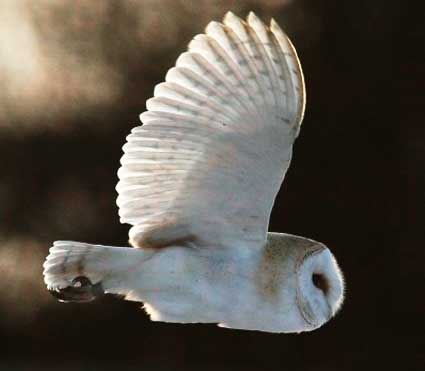
"Owl," he said to the barn owl sitting beside him, "I need your help."

Owl turned his head and blinked.

"You know the beach that circles Haven's Cove?" the goblin went on.

Owl nodded.

"Well, there's a bully that's hanging around that beach, a big old bully seagull that's been stealing from the children."

"But seagulls are scavengers by nature," Owl said. "They'll eat anything they can steal."

"Oh, I know," said the goblin, "but this seagull has started stealing toys as well as food, taking them out over the water and dropping them too far out for the children or even the grown-ups to get. It's just plain mean."

"Hmmm...." said Owl. "What do you have in mind?"

"Well," said the goblin, "I want to catch him and bring him here for a day." He pointed at the knothole that served as the front door into his house.

"And how can I help?"

"If I can catch him, can you carry him here?"

"I think so."

Just as the sun was rising, the green goblin put a half-eaten bologna sandwich, a bright red plastic pail, some green netting, and a roll of heavy string into a paper bag, then climbed onto the owl's back. They flew the short distance to Haven's Cove.

It was too early for any families to be there, but the seagulls were awake and noisy, soaring so high that the early sun lit up the underside of their wings, then diving down to catch a fish or to root around in the sand looking for left-overs from the day before. The goblin slid off Owl's back onto the beach. He set out the sandwich and the pail. Pretty soon, gulls began to swoop down for a closer look at his treasures, but he waved his arms and shouted, "No, they're mine! Go away!"

Then an enormous seagull with a pure white belly and black feathers on his back flew in low and fast and grabbed up the red pail before the goblin could stop him. The gull flew a long way out over the water, then dropped the pail. It looked like a tiny red dot floating out there on the ocean. The gull screeched with delight.

"That's our guy," said the goblin to the owl. He took out the netting, holding it tightly in his right hand, and stood up. When the big seagull swooped down for the bologna sandwich, the goblin flung the netting over him and pulled it tight. The gull was trapped! The goblin used string to wrap around and around the seagull so its wings couldn't open.

Then the goblin climbed back on Owl's back, Owl snagged the wrapped-up seagull in his giant talons, and they flew back to the goblin's tree.

"Good luck!" Owl called as he headed home to his barn for a good day's sleep. "I'll be back after dark to hear how it goes."

"Screech, squawk, help!" screamed the angry gull.

"Oh, dear, I probably should have tied your beak shut, too," said the goblin. "Except then you couldn't eat."

"Eat?" squawked the seagull. "Food! Give me food! Screech! Screech! Squawk!"

"Oh, stop your noise!" demanded the goblin. "I'll feed you when you're ready."

"Ready now! Hungry! Feed me! Now!"

The goblin looked at the wrapped-up seagull standing in his living room. "Come here," he said.

The seagull hopped over to the goblin, who went out the door onto the branch. The seagull hopped after him. The goblin showed the seagull a piece of oatmeal bread, then he leaned over and dropped it onto the ground below. The seagull struggled to free his wings so he could fly down to get the bread, but his wings were trapped. He danced up and down on the branch on his long pink legs, but he couldn't figure out how to get to the bread.

The goblin went back inside the tree and put a pot of water on the stove. When the water was hot, he made two bowls of instant maple and brown sugar oatmeal. Then he leaned his head out the door and asked, "Are you still hungry? There's food inside."

The seagull  hopped back through the door and into the goblin's kitchen. "What's that?" he squawked, smelling the warm oatmeal.

"It's the best food in the whole world," said the goblin.

The goblin lifted the seagull onto the table. The seagull stuck his beak into the oatmeal and lifted his head to swallow. He stuck his beak back into the oatmeal over and over till it was all gone. "More!" he demanded.

"Fix it yourself," said the goblin, who was just finishing his own bowl of oatmeal. "There's water in the pot and another packet of oatmeal right there next to you."

The seagull looked from the stove to the table. He reached out and tried to use his beak to turn the stove on, but he couldn't do it.  He picked up the packet of oatmeal in his beak and shook it, but it didn't open. He tried dropping it on the floor, the way he dropped clams to break open their shells, but not only did the packet not open, he couldn't fly down to the floor to get it. "I can't," he said to the goblin. "You get me more."

The green goblin came and stood in front of the seagull. "Not yet. I want you to think about something first. You think it's fun to steal food and toys from children. Now the food I understand; it's not nice, but it's nature. But the toys! You take toys and drop them so far out to sea that no one can get them back. And you don't even play with them. That's just plain mean. So for now, I'm going to leave you here so you can look at the oatmeal packet for awhile and imagine what it's like for those of us that can't fly to see something that we want -- something that you stole -- and not be able to reach it."

The goblin went out the door and climbed down the tree, leaving the seagull stranded on the table. He found an old tennis ball in the grass and kicked it ahead of him as he meandered along. He heard the music of the ice cream cart and veered off to find it. The ice cream man was blind, so if no grown-ups were around, the goblin liked to spend time visiting with him because the blind man never suspected he was talking to a goblin. Today, though, there was a long line of children with their parents waiting to get ice cream, so the goblin just quietly rolled the tennis ball to the blind man's guide dog, then turned back toward home just as clouds began to gather.

The seagull was still standing on the table where the goblin had left him. "Screech! Let me go! How do you stand not being able to fly?" he squawked. " I remember the bread on the ground. I can see the oatmeal packet on the floor. But I can't get to any of it. I hate this!"

"You can still walk," said the goblin.

"But that's not enough. I'm a bird! You're mean, goblin, to wrap me up like this! I'm starving to death, and my legs are tired from standing, and the whole sky is calling to me."

The goblin sighed. "Do you have any idea yet why I had Owl bring you here?"

"Because you're mean."

"No, because you are. I'm going to free your wings now so you can fly again, but what I really wish is that you might think twice before you steal things you don't even need. I wish you would remember what it's like not to be able to fly."

He got a pair of scissors and carefully cut the heavy string that bound the seagull's wings. The seagull spread his wings, knocking pots and pans off near-by shelves, then he bolted for the door and took off into a soft rain, wheeling and screeching with joy. The goblin watched as the seagull flew toward a rainbow that arched up into the clouds.

The green goblin hunched his shoulders and sighed again. "I don't think that did much good," he thought as he turned back into his kitchen and began to pick up the scattered pots and pans.

The sun was down and the moon just peering over the horizon when Owl tapped at the door with his beak. When the goblin opened his door, Owl set down a red pail. "I found this hanging on a branch of your tree," he said. "Is it yours?"


Monday, August 5, 2013

A world alive with color


Reminder: Next week is the second Monday of the month, which means a Goblin-to-Go story. Send suggested “ingredients” for the story! If this is new to you, check out “Jesus Told Stories” from May 6, 2013: http://familyfaithincyberspace.blogspot.com/2013/05/jesus-told-stories.html


Once again I’m writing from 38,000 feet airborne, returning home from a conference on the intersection of art and faith put on by Image magazine. Poets, painters, playwrights, mystics and musicians, photographers, novelists and essayists all gathered in Santa Fe for a week of workshops, worship, and performance, interwoven with ongoing conversations about creativity and Christianity. 

Living for a week in a community of Christian artists was extraordinary on many levels, but what lodged in my heart were the stories of those who had grown up in what they sometimes called the “black and white world” of fundamentalism but who, through encounters with music or a book or a poem or a film or a friend, suddenly saw the wideness of God’s mercy and the interconnectedness of all life.  As Fr. Richard Rohr says, they realized that “Everything belongs.” Suddenly their lives pulsated with color, with possibility, with ambiguity, with doubt that fueled a deeper faith. And from this awakening came creative outpourings, as though the only response to the glory of God was to seek ways to express it.

Their stories reinforced my own sense that engaging children in creative pastimes is a deeply Christian endeavor, one that makes them co-creators of the world they inhabit. Creativity is incarnational. My own instructor, Jeffrey Overstreet, spoke of how we all “carry eternity in our hearts” and so are able to recognize the holy in the most unlikely places – such as the film clip he showed us of Spiderman…. 

So spend time this week making up stories, building sand castles or block cities, dancing to music, putting on a puppet show, playing with play dough – baking bread. And next week, we’ll create a story together.

Sunday, July 28, 2013

Sometimes, I'm an idiot


In Sherry Turkle’s book Alone Together, she describes the familiar scene in a coffee shop where two people – friends, lovers, perhaps spouses – sit at a table, each surfing the web or texting someone else on their laptop or cell phone rather than interacting with the human being sitting across from them.

This kind of “alone together” can seep into our interactions (or lack thereof) with children, too.  Instead of being fully present, sometimes I find myself instead using my cell phone to take pictures so I can remember the moment with a grandchild, rather than actually experiencing it.  One of my photos shows six-month old Anastasia trying to peer around the phone to see where I’ve gone. 

It’s harder and harder to be fully present to “this” moment in “this” place with “these” people, when the rest of the world is so readily available quite literally at our fingertips. Oh, I’m not complaining – I love the ease of information, the infinite possibilities.  Right now I’m on a plane 38,000 feet in the air, nothing out the window but clouds below and sky above, but I can exchange email with my 93-year old father or peruse my online photo albums or look up a quotation from Richard Feynman or find the words to a forgotten poem.

But sometimes we really do need to be fully present to one another, especially to the children. As their caretakers, we are called to be instruments of the love with which God gazes on them, to take immediate delight in their accomplishments as they create mud pies or build block cities, learn to crawl or dance or swim. To be there, simply to be wholly there.

I feel (this is embarrassing) bereft and somehow vulnerable if my cell phone is not in my pocket or right next to me.  But I am also more alive and attuned if sometimes I can walk away from it and just “be.”  I can see my grandchildren better when I’m looking at them unencumbered, not through a lens, not already crafting in my head the email I will send along with a photo.  

It’s all really just about hanging out with one another in real time. God’s constant call into community reminds us that we’re not meant to go it alone, not even alone together.


Saturday, July 20, 2013

What if....


Gratitude, I read long ago, is the first spiritual impulse, a spontaneous “thank-you” to the universe. Jane Goodall reports that even chimpanzees dance with delight at the sight of a waterfall, and I suspect that all of us treasure moments and memories that surprised us with impulsive joy. Such moments are gifts of grace, unearned and unsought.

But life is also filled with quieter joys, subtler moments and glimpses we might miss unless we’re looking. Today I want to share the story of how I learned to look, and to encourage you to help your children look, too. Simply by looking for blessings, we are blessed.  – I wish I had begun this practice when my own children were young.

A memory from my last year of teaching: Sandwiched between gray snow and a mud-colored sky, I sat in the car and watched colleagues trudge by, heads bent against the March wind, shoulders hunched under the weight of books and papers. Downing the last of my coffee, I looked at the list on my lap:

            March 27
·      upside down cat, purring through meditation
·      lamb and lentil soup
·      softening silhouettes of tree branches
·      first worms of spring

Only four. I needed one more, one more thing for which I’d been grateful over the past 24 hours. As I read through the list again, I was caught by the worms I’d seen on my morning walk, reminding me of Marilyn’s exuberant pronouncement: “I can’t wait till it’s spring, when there’ll be bats in the air and worms in the ground!” Marilyn was an Animal Science major, finishing her degree back in 1969 while I was finishing mine in English. We shared a love of books and animals and fishing, and the first worms of spring always reawaken memories of those years. And suddenly I knew the last item:

·      the gift of friendship

I tucked the list into my briefcase and prepared to face the day.

I still have that small list, along with literally thousands of others from eleven years of keeping track. It’s quite a collection of memories.


During the eleven years I practiced intentional gratitude, I was never sure if my ongoing morning ritual “armed” me for the day or “opened” me to it, but I do know that it made a difference: I carried less resentment, less anger, even less fear. As e. e. cummings wrote, I found that “the eyes of my eyes were opened” once I began to scavenge the days for gratefulness, for what was good.

I’ll be honest here: left to my own devices, I probably would have given up the practice after a year or so and fallen back into grumpier ways. What kept me going for those eleven years was sharing my daily gratitude list with a colleague.

Every school day – literally every day; we never missed one – the two of us managed to find one another in the momentary lull before students arrived so we could share what was on our lists.

Our lists included everything from the color of dawn to matters of social justice, from our families or our cats to a great student essay, food and books and birds, kindness and the texture of a wool blanket – and if we could think of nothing else, we gave ourselves permission to start our list with “a place to live, work to do, food on the table….”  Over time, we discovered that by having to look for “things for which to be grateful,” we became more attuned to beauty, to goodness, to possibilities, to hope. Instead of waiting for the next shoe to drop, we watched for the next blessing.

This, it seems to me, would be a lovely habit to instill in a child, this business of being on the lookout for “things for which to be grateful” – for blessings. At our Family Service on Sunday morning, we always ask everyone what they might like to thank God for, and the children always have answers: an uncle who got a job, their cat or dog, a chance to ride horses, Spiderman, their mom or dad, ice cream. They already have the impulse to be grateful. What if we cultivated it? What if we all shared gratitude lists at home, day by day, for eleven years?

Monday, July 15, 2013

Suffering, joy, and blueberry muffins

The psalmist writes,"You speak in my heart, Lord, and say, 'Seek my face.'  Your face, Lord, will I seek."

Jesus tells his disciples, "Whoever has seen me has seen the Father."

At our Baptism, we agree to "Seek and serve Christ in all persons...."

Following this thread, what all this means is that to see the face of God, we only have to look at other people. God dwells in each of us.

That explains why the universe operates as it does, this intricate dance of interconnectedness. It sounds like a platitude to say that the suffering or joy of a child a thousand miles away affects the wellbeing of our own children, but at the quantum level, it's true because all of us are both creatures and bearers of God.

I just read in Christian Wiman's book My Bright Abyss: Meditations of a Modern Believer about "scientists measuring the radioactive decay after such large-scale events as September 11 or the 2003 tsunami in Indonesia. It turns out that nuclear decay, which is, if not a constant, as close to such a thing as we can get, inexplicably increases after these events. As if contingent matter echoed or shadowed or even shared our sufferings (and our joys!). As if creation itself cried out with us."

I don't know how creation itself is responding to the verdict in the Trayvon Martin case, but looking at the ripple effect of that verdict in cities around the country, certainly there is clear evidence of that intimate interconnectedness.

And as I read about the Royal Baby Watch in Britain as the due date slips past, the anticipatory delight that infuses that whole country offers another example of humanity's shared and sacred dance.

-- And just how, you might ask,  does any of this have anything to do with how we should tend the children in our care?

I'd suggest that one way to help heal the world is to give our children a chance to play, to create, to delight -- and so to bring joy into the dance. Our interconnectedness, after all,  isn't just a grim dirge of shared suffering but has the chance to be healing, even celebratory. (We also, as the grown-ups here, have a responsibility to "seek and serve" others in Christ's name through involvement in local or global issues, and as the children grow up, to involve them in this work as well.)

And so, on this midsummer Monday, I want to share my grandmother's recipe for blueberry muffins, and invite you to involve the kids in making them. Baking is such a good reminder of how all sorts of different ingredients can get mixed up and turn into something delicious for sharing. As you smell them baking, think of how that aroma is spreading out like balm into the whole world.


Ruth Hyde Hanford's Blueberry Muffins

Preheat oven to 425 degrees

Line a muffin tray that makes a dozen muffins with muffin papers.

Mix or sift together:

 2 cups unbleached white flour
 1 cup sugar
 4 teaspoons baking powder
 1 teaspoon salt

Separately mix together

 1/4 cup melted butter
 1/4 cup milk
 two large eggs

Add the wet ingredients to the dry and mix lightly. If it's too dry, add a couple more tablespoons of milk as needed. Don't over-mix.

Then add

 2 cups of blueberries -- fresh are lovely, but frozen (defrosted) blueberries also work just fine

Fill the dozen muffin papers with the mixture. (If you prefer smaller muffins, you might be able to make another half dozen.)

Bake at 425 degrees for about 20 minutes (closer to 15 if you make smaller muffins).

Read Robert McCloskey's Blueberries for Sal while the muffins bake, and you might see the face of God even in the bears.


Thursday, July 4, 2013

A Goblin-to-Go Story: a royal blue elephant, a park bench, a family of teddy bears, driftwood, and a visiting stuffed sheep

The green goblin dangled his legs over an unfamiliar branch. He had just arrived by Owl Express, jumping from back to back of the owls that carried him here to his cousin's tree.

From where he sat, he could see beyond the nearby houses and yards to a shady park with a small pond.

"What's that in the middle of the pond?" he asked his cousin, the turquoise goblin.

"Oh," she said,"it's an elephant."

"But it's blue! I thought all elephants were sort of gray."

"You'll see," laughed the turquoise goblin, scrambling down the tree. "Come on!"

The goblin cousins clambered over fences and around corners until they reached the park, and sure enough, right in the middle of the pond was an enormous royal blue elephant, his raised trunk spraying water that sparkled in the early morning sunlight.

"He's a fountain!" exclaimed the green goblin. "I thought he was real."

"No," said his cousin, "but he's still fun. Can you swim?"

"Of course I can!" the green goblin answered.

"Then let's go," the turquoise goblin said as she dashed into the pond. The green goblin ran in after her, and they swam out to the elephant. They took turns climbing up the elephant's tail, all the way onto his back, then jumping back into the water. It was so much fun that they lost track of time.

All of a sudden they heard laughter and voices, and when they looked, four mothers were settling onto a park bench while a group of children raced around the park tossing teddy bears into the air.

The goblins hid behind the elephant's hind legs. "Now what?" asked the green goblin. "How can we get back to land without the grown-ups seeing us?"

The turquoise goblin whispered, "Follow me. If we don't splash, and we don't get too close, they'll just think we're big frogs," and she led the way to the far bank.

Safely on shore, they made their way around to the park again to watch the children play. The three boys and two girls each had a teddy bear. There were two brown bears, a black bear, a polar bear, and one bear with golden fur. The children had set up a piece of driftwood as a table and placed the bears around it as though they were all one big family. Now they were gathering acorns and clover to feed the bears.

"Hello!" they heard the mothers call, and they saw another little boy come galloping into the park holding his mother's hand. In the other hand he held a big stuffed sheep with curly horns.

His mother sat down on the soft grass next to the park bench. "Look," she said. "Your friends are all down by the pond."

The boy ran down the hill waving his stuffed sheep. "Look what I've got! Can he join the party?" he asked, wedging his sheep into the circle of bears without waiting for an answer.

"But that's not a bear!" one of the girls said, and grabbed the sheep. She grabbed it so hard and so fast that she lost her balance. The sheep went flying through the air, but the girl tumbled into the pond.

Without even thinking, the two goblins dove into the water and pulled the little girl to shore. The other children looked on, astonished, then they cheered "Goblins! Goblins!" and they all helped their soggy friend back up the hill as the goblins quietly swam away.

By this time, the mothers had dropped their coffee mugs and were rushing to see what had happened.

"Sally fell in, but the goblins saved her!"

"But she threw Henry's sheep!"

"What goblins?"

"The goblins saved her!"

"Are you ok?"

"Goblins came and pulled me out."

"What goblins?"

"Is my sheep ok?"

"How many goblins?"

Amid the confusion, the turquoise goblin whispered to her cousin, "I bet we'll get breakfast for this. I've helped Sally out of trouble before, and her mom is one of the grown-ups who knows about me. I wonder if she knows there's more than one of us today."

And sure enough, after all the mothers and their children had gone home, the goblins checked the back steps of Sally's house and found two bowls of oatmeal. "Peaches and cream!" the turquoise goblin exclaimed. "My favorite!"

The green goblin happily ate his share, though he did miss the maple and brown sugar oatmeal that the families back home always left for him.


Sunday, June 30, 2013

Iron rails and flower soup

(Note: the post next Monday -- the second Monday of the month -- will be a Goblin-to-Go story, so it's time to send suggested  "ingredients" for the story.)

I didn't mean to write about another book this week, especially another book about trains, but my husband and I took the train to Boston last Monday for our anniversary, and I got to thinking about one of my least favorite children's stories: Tootle.


"The path to my fixed purpose is laid with iron rails, whereon my soul is grooved to run," says Captain Ahab in Moby Dick. I love that book -- wrote my graduate thesis on Melville -- but that doesn't mean I approve of Ahab's iron-railed pathway. Inflexibility can be dangerous and damaging.

It's why I dislike Tootle so much, the Little Golden Book about the train engine who was learning how to be a big locomotive, but who kept leaving the track to go play in the meadow among the flowers and the butterflies and the horses, ending up (if I remember correctly) with flowers in the soup bowls -- until he was finally coerced into conforming, agreeing to "stay on the rails no matter what." No more creative play. No more exploring beyond the fixed rails.


When my boys were little, I wanted them to become themselves, not somebody else's idea of who or what they ought to be, so I stopped reading that book. My mother and I got into an argument over it; she insisted that a train belongs on the tracks, and that people, too, need to figure out where they belong and what they are meant to do, and live accordingly. I suspect some of our contention had to do with generational differences: she grew up during the Great Depression, whereas I was a child of the '60's. (One of the illustrations does show Tootle looking a lot like a flower child of my generation.) 

Older now than my mother was then, I begin to understand her reasoning: after all, I did want the Amtrack Downeaster to stay on the rails last Monday; I do want my doctor to practice careful medicine; I want my priest to be a faithful pastor.  But the injunction to "stay on the rails no matter what" still seems to promote a kind of mindless, dangerous conformity.

And just as there turns out to be published commentary about sexism in The Little Engine that Could, last week's book (scroll through http://tigger.uic.edu/~plotnick/littleng.htm, with thanks to my dear friend Dina) there is also an article that talks about Tootle as an anti-gay book (see http://prospect.org/article/tootle-ex-gay-train), so it seems particularly appropriate to celebrate the Supreme Court's decision last week to strike down DOMA by questioning what becomes of the free-spirited Tootle. 

And, in spite of my book-bashing here, it's probably ok to read Tootle to our kids as long as it's balanced by plenty of other books with more openly creative and inclusive messages. That said, it's not one I will buy for my grandchildren.

Saturday, June 22, 2013

Engines and Elephants

Read to your kids.

That sounds pretty obvious, but I remember a workshop I attended over 20 years ago on "Language Acquisition" that made me aware that the best way to improve the reading skills of the less adept 17-year-olds in my classroom would be for someone to have read to them when they were little. (It made me fantasize about a sabbatical during which I hung out at laundromats and read stories to children between infancy and 3 years.)

If kids don't hear the written word spoken (as in reading books to them), they don't grow up with "sentence sense." They may have magnificent vocabularies from a highly verbal environment, but reading and writing will be more of a challenge for them than for their read-to classmates. Fourth grade is often when the gulf between the two groups becomes obvious.

Once we commit to regular reading, there's the next question: what books are best? Children's picture books can be like poetry in their condensed clarity and precise choice of words, and there are plenty of really wonderful ones out there. But in the end, don't worry too much about "quality" -- I had a professor who said (about adults, but it works for kids, too) that "Readers of trash have taste that can be improved; non-readers have no taste." It's a pretty harsh-sounding statement, but I find it also a really generous one. The basic message is:  just read.

Meanwhile, in connection with "what to read," I want to share a story about one of my kids' favorites. I was standing in line at the library to check out The Little Engine that Could, one of the classics, for my two little boys, when the woman behind me said, "You shouldn't be reading that to your kids. It's sexist."

"But it's got a female protagonist," I responded. "The little engine is a girl! I thought it would be good for my boys to know that girls can be strong, too."

"Yeah," the other mom responded, "but look at how the men are represented. First, what's the broken-down train carrying?"

"Food and toys for the children on the other side of the mountain."

"Right," she went on, "women's work.  And when the big male engines are asked to help, they say they're too busy, too tired, or too important to bother. What an image to give kids about adult males, that children aren't worth helping! It's got to be a female engine that cares enough to do the job."

I checked the book out anyway, that day and many times after. But off and on I would hear that strident voice telling me it was a bad choice.

Fast forward 20 years. In my 11th grade American Literature classroom, on the last day before Christmas vacation, I often asked students to bring in their favorite story books from childhood and we'd read them aloud. I explained that we were honoring their "language acquisition" as children, but it was also fun. About a third to a half of the students would bring in a favorite. One year we still had time left when we'd finished all their books, so I asked them how many remembered The Little Engine that Could. Although no one had brought it in, most of them knew it. So I asked: "What color is the engine?"

"Red!" was the universal response.

"What gender is the engine?"

"Male!" they all said.

"Wrong on both counts," I said; "she is blue," and I told them the story of the irate mom. They just shook their heads.

That experience relieved any left-over guilt about reading that beloved book over and over to my own children. My students remembered the story line, the courage and persistence and determination of the little engine who not only thought she could, but actually made it over the mountain -- they weren't caught up in the gender or even the color. It was ok.

So again the message is: just read. Read lots, read often, and trust that the variety of books you choose will offer an enormous range of ideas and images. And if you still worry about The Little Engine that Could, balance it with the tender image of fatherhood in Horton Hatches the Egg.


Sunday, June 16, 2013

a light in the darkness


At the triennial deacons’ assembly last week in Williamsburg, what was meant to be an outdoor liturgy got moved inside because dangerously violent storms were predicted. The sky was still a hazy blue at 4 p.m. when the service began, but a few minutes into the Rt. Rev. Carol Gallagher's homily, the sky blackened and roared as trees outside the window bent sideways, then bowed to the ground. Torrents of rain suddenly threw themselves against the windows.

Then the lights went out.

Undeterred, the bishop finished her homily in the dark as the storm raged on, then invited everyone to get out their cell phones and finish reading the service by the electronic glow. We did. 

“Let there be light,” God said. And there was light. Now, light emanating from a cell phone certainly isn't what the writer(s) of Genesis had in mind, but it worked. The bishop's immediate response reminded us that in the midst of darkness and potential danger, we actually carried light with us. (Who would have thought that the Light of Christ could come from the light of a cell phone...) 

It took over 24 hours for power to be restored, and during that time I began to ponder how parenting (or grandparenting) can often require the same kind of good-humored, creative, and instantaneous flexibility that Bishop Gallagher showed. 

I don't think parents can avoid the dark times, whether from a two-year old's tantrums or a terrifying illness or the outrageous negativity of an unhappy teenager. My own tendency has always been to want the big fix, an end to the darkness, but that peculiar service-by-cell-phone-light was a reminder that sometimes we can find a small and immediate thing that doesn't quiet the storm or dispel the darkness, but that lets us function in the midst of it all. Sometimes just getting through is enough, just seeing the next word or the next step.

And it helps to have companions; a lot of little lights together make us less lonely and afraid. 

My favorite short story is Raymond Carver's "A Small Good Thing." It's a desperately sad story, but the deep truth it offers is that a single, small good thing can offer hope in the midst of horrendous events. If this is, for whatever reason, a dark and stormy time in your life as a parent, think about what small good thing might provide a little light, a little hope, a brief respite from the turmoil. 

Like those cell phones in our pockets that gave light to our prayers, probably what you need in order to take the next step, and the next, is already within reach. And if nothing else, prayer in the midst of darkness ultimately provides its own light.

Monday, June 10, 2013

Goblin-to-Go Story: beets (growing in a bucket), a three-legged stool, a helicopter, lemon sherbet, and a dirty fedora (size 7 3/4)


When the leaves of his tree shook with laughter, the green goblin knew that Elfie's light step had tickled the toes of the tree on her way up.

The wood elf was small as a fairy, but without wings. "Guess what?" she asked as she settled down next to him on his favorite branch. "I've just seen beets in a bucket!"

"Hmm," the goblin replied, scratching his green head,"isn't it early for beets?"

"Oh, I don't mean picked beets, beets planted in a bucket. On a back porch. I've seen flowers growing in buckets, but never beets!"


photo by Micah C. Brown

The full moon was sliding down behind the riverbank when suddenly a giant shadow drifted across it, wide wings and sharp talons heading straight toward the goblin's tree. With a soundless force that shook the branch, a barn owl landed next to them. He towered over them both.

"Morning, all," he said. "What's new with you?" Elfie ruffled his soft feathers and told him about the beets.

Owl listened without blinking an eye, then said, "A week ago when my hunting took me out beyond the last field, I flew home by way of the city, and I saw that way up on a seventh floor fire escape, someone has built a fairy house in a red bucket. Your beets reminded me."

"What fun!" Elfie said. "Can you take us there? I want to see it!"

The owl began to protest that it was too close to dawn, but the goblin said, "There's plenty of time. And besides, we haven't had an adventure together in ages."

So Owl bent down, and the elf and goblin clambered onto his back. Stretching out his great wings, he waited to catch the morning breeze, then off they went, soaring over the sleepy town, the winding river, fields, farms, another village, then the city itself. The green goblin had made occasional visits to children in the city, but the wood elf had never ventured there before. When they finally landed, she almost tumbled off the owl in her excitement because there on a three-legged stool, among all the other flowerpots on the fire escape, was the fairy house!


While Owl sat on the railing to keep watch, Elfie slipped through the front door into the fairy house, and Goblin set about testing its construction. "Somebody built this to last," he said. "It's weatherproof, and sturdy enough to withstand even the high wind of a helicopter going by."

"And beautiful!" Elfie added, poking her head out one of the tiny windows. "It has a bed, and chairs, and a table inside. This is way better than beets!"

She came out and sat down among some star-shaped flowers. "But fairies don't come this far into the city, so even though they could fly here, they won't. It's too bad."

The green goblin, meanwhile, was peering into a window. "The little girl who's asleep in there has fairy pictures on the wall," he said,  "and is wearing pajamas with fairies on them.  I do wish we could talk a fairy into living here." He sighed, knowing it would be impossible. Then his face brightened. "But you could!" he said, pointing to Elfie.

"I am NOT a fairy!" said the wood elf. "And besides, I can't fly, so I'd be stuck here, seven stories up in the air."

"But," said the goblin, whose job in life was to make people happy, "it's just your size. And you like it. Couldn't you stay for a little while, like a vacation, just a week? I could sleep among the flowerpots, and Owl here could check on us every night, couldn't you?" Owl nodded wisely. The green goblin used his softest, most persuasive voice: "Just a week?"

Elfie didn't answer.

"Ok, how about just one night?" the goblin went on. "Think about all the work the little girl put into this, and no one ever living here. It would be so sad." He sighed an enormous sigh.

Elfie burst out laughing. "Ok, ok, you win! Let's give it a try today. Just promise you won't leave me here alone."

The goblin promised. Owl agreed to return that night, then took off into the brightening sky.

Now on summer mornings, Keesha liked to take her breakfast out on the fire escape. It gave her a chance to check on her fairy house. Even though it had stayed empty for such a long time, she still hoped, every morning. She opened the window, put her orange juice and oatmeal on the windowsill, and climbed out.

She heard a happy gasp, and saw a green face peeking around her mother's flowers. "Is that maple and brown sugar oatmeal?" the voice asked.

Keesha knew not to talk to strangers, but this stranger was only the size of a large cat, and he was green like Kermit the Frog. "What are you?" she asked. "You're too big for my fairy house, but too small to be a person. And you're green."

"I'm a goblin," he said, "and my favorite breakfast in the whole world is instant maple and brown sugar oatmeal."

"What are you doing here?" Keesha asked.

"I've brought a friend to visit your fairy house," the goblin said. "May I have some of your oatmeal?"

"You brought me a fairy!" Keesha exclaimed. "Oh, where is she?"

Elfie stepped out of the fairy house, her eyes sparkling. "I'm here, but I'm not a fairy. I'm a wood elf."

Keesha looked at Elfie, dressed in the soft colors of the forest, standing by the house Keesha had built with her own hands, and she smiled a smile that lit up the whole morning. "I don't care what you are -- just that you're here! You came! Someone came to my house!" She put out her hand, and Elfie stepped gracefully onto it. Keesha turned to the green goblin. "Thank you," she said. "And yes, you may have all of my oatmeal! I can get myself some more."

Turning back to Elfie she asked, "And what do you like to eat?"

Elfie had rarely eaten people food, so she told Keesha to bring whatever she liked best. The goblin was just polishing off the oatmeal when Keesha came back through the window carrying an egg cup with a small scoop of lemon sherbet and the tiniest doll spoon the goblin had ever seen. Elfie laughed as the sherbet skittered around in the cup while she chased it with the spoon, and she laughed again with delight when she tasted it.

"It's the sweetest thing I've ever eaten!" she said. "Do you have this for breakfast, too?"

"Oh, no, it's supposed to be dinner dessert," answered Keesha. "Don't tell my mum."

The green goblin set a gentle hand on Keesha's arm and said, "We'd best not let your mum know that we're here. Grown-ups don't always understand. We can be your secret for now."

Keesha nodded wisely. "She'll be on the phone all day anyway. She answers questions for something called Amazon that I thought was a river but she says is books."

The green goblin curled up for a nap inside an old gray fedora that had been used to hold garden tools (he took the tools out first). The last thing he saw before he fell asleep was Elfie curled up in the palm of Keesha's hand while the two of them made plans to build a front porch for the fairy house.